HACK LINKS - TO BUY WRITE IN TELEGRAM - @TomasAnderson777 Hacked Links Hacked Links Hacked Links Hacked Links Hacked Links Hacked Links cryptocurrency exchange vapeshop discount code vapewholesale affiliate link geek bar pulse x betorspin plataforma betorspin login na betorspin hi88 new88 789bet 777PUB Даркнет alibaba66 1xbet 1xbet plinko Tigrinho Interwin

Category: Hudasoft

  • Gemini-Powered Siri: How Apple and Google Are Redefining AI

    Gemini-Powered Siri: How Apple and Google Are Redefining AI

    It’s the announcement that’s sending shockwaves through the tech world. In a move that feels like two heavyweight boxers stepping out of the ring to build a gym together, Apple and Google have officially entered a massive AI partnership. This isn’t just a minor update; it’s a multi-year deal where Google’s Gemini models will become the backbone of “Apple Intelligence,” finally giving Siri the brain transplant users have been waiting for.

    On January 12, 2026, the two giants issued a joint statement confirming that the next generation of Apple’s foundation models will be powered by Google’s cloud and Gemini technology. For Apple, it’s a pragmatic admission that building a world-class AI from scratch is hard; for Google, it’s a golden ticket to billions of iPhones. By choosing to collaborate instead of compete, these “frenemies” are reshaping the entire digital landscape in one of the most significant tech alliances of the decade.

    What Is the Apple and Google Joint AI Announcement?

    This isn’t just a small software update; it’s a major strategic shift. On January 12, 2026, Apple and Google announced a multi-year collaboration that fundamentally changes how your iPhone thinks. 

    After months of rumors, the two tech titans confirmed that they are joining forces to put the world’s most advanced AI directly into the hands of over 2 billion users.

    According to a report by Business Today, this deal is estimated to be worth a staggering $5 billion, making it one of the largest commercial AI agreements in history.

    Gemini: The New Brain for Apple Foundation Models

    The core of this partnership is the integration of Google’s Gemini models as the primary engine for the next generation of Apple Foundation Models.

    While Apple has always preferred to build everything in-house, they officially stated in their joint announcement that Google’s technology provides the “most capable foundation” for their AI ambitions. This means:

    • Smarter Siri: Gemini 3 will power a revamped Siri, giving it the ability to handle complex reasoning and multi-step tasks.
    • Seamless Integration: Instead of just being a third-party app, Gemini’s intelligence will be woven into the core logic of the iOS operating system.
    • Multimodal Skills: Siri will finally be able to understand not just text, but also images and on-screen context in real-time.

    The Power of Google’s Cloud Technology

    One of the biggest hurdles for mobile AI is “horsepower.” Complex AI tasks require massive computing strength that a phone battery simply can’t handle alone. That’s where Google’s Cloud technology comes in.

    To make this work, Apple is utilizing a hybrid approach. While simple tasks happen on your device, the heavy lifting is offloaded to Apple’s Private Cloud Compute, which is backed by Google’s high-scale infrastructure. As detailed by Associated Press, this allows the new Siri to tap into 1.2-trillion parameter models for “world knowledge” answers while keeping your personal data securely under Apple’s lock and key.

    Why Apple Chose Google’s Gemini AI

    Apple doesn’t make big moves on a whim. The decision to hand over Siri’s “brain” to Google came after a brutal, high-stakes evaluation process. Apple’s team of engineers spent months stress-testing the world’s best AI models, including OpenAI’s ChatGPT and Anthropic’s Claude, to see which one could actually survive the demands of 2 billion iPhone users.

    In the end, Apple released a joint statement calling Google’s technology the “most capable foundation” for the future of Apple Intelligence.

    The Winning Edge: Performance and Scale

    Why did Gemini win the rose? It wasn’t just about being “smart”; it was about being reliable at a massive scale. According to industry benchmarks from Kavout, Google’s Gemini 3 Pro outperformed its closest rivals in three key areas:

    • Multimodal Reasoning: Gemini is significantly better at “seeing” and “hearing”; it can understand a video or a complex image on your screen much faster than other models.
    • Mathematical Logic: In “MathArena” tests, Gemini crushed the competition, making it far more reliable for tasks like planning schedules or calculating expenses.
    • Reliability: Apple’s internal testing found that previous versions of Siri failed complex queries about 33% of the time. Gemini 3 essentially slashed that failure rate, providing a much smoother experience.

    Innovation Without the “Creepiness”

    Another huge factor was flexibility. Unlike other AI companies that wanted to “own” the experience, Google agreed to build a customized, white-labeled version of Gemini specifically for Apple.

    This allowed Apple to keep its famous “walled garden” intact. As noted by the Washington Examiner, this wasn’t just a win for performance; it was a win for innovation. 

    Google provided the raw power (the engine), while Apple kept the steering wheel (the user interface and privacy controls). By choosing Gemini, Apple secured a partner that could provide world-class “agentic AI” that doesn’t just talk but actually does things for you across your apps.

    How Gemini Will Power Apple Intelligence

    To understand this deal, you first have to understand Apple Intelligence. Think of it as the personal assistant of your dreams, a system that knows your schedule, your emails, and your photos, and uses that info to make your life easier.

    While Apple is great at making sleek gadgets, it needed a “super-brain” to handle the massive logic required for modern AI. That’s where Gemini comes in. It acts as the high-performance engine under the hood of Apple’s software.

    The Hybrid Powerhouse: On-Device + Cloud

    Apple uses a “best of both worlds” approach to keep your phone fast and smart:

    FeatureHow it WorksPowered By
    Simple TasksWriting an SMS or summarizing a short note.On-Device AI (Apple Silicon)
    Complex LogicPlanning a 3-day travel itinerary based on your emails.Google Gemini (via Apple’s Cloud)
    World Knowledge“Who won the game last night?” or “Explain quantum physics.”Google Gemini

    By using Gemini, Apple doesn’t have to slow down your phone. The heavy lifting happens in the cloud, while the quick, private stuff stays right on your device.

    A More Personalized Siri: What to Expect

    Let’s be honest: Siri has been a bit “behind the times” lately. This partnership is the ultimate glow-up. With Gemini’s reasoning capabilities, Siri is evolving from a voice-activated remote control into a true digital agent.

    What’s Changing?

    • Real Conversation: You won’t have to repeat yourself. If you ask about “the weather in London” and then say “and what about Paris?”, Siri will actually know what you’re talking about.
    • On-Screen Awareness: Siri will finally be able to “see” what’s on your screen. You can look at a photo and say, “Send this to Mom,” and it will just do it.
    • Smart Summaries: No more scrolling through 50 unread messages. Siri can give you a “TL;DR” of your group chats and highlight the important parts.

    The Timeline: You won’t have to wait years. The revamped, Gemini-powered Siri is expected to start rolling out with iOS 26.4 in the spring of 2026 (around March or April).

    Privacy and Security: Apple’s Core Promise

    The biggest question everyone has is: “Wait, if Google is powering the AI, can they see my data?”

    The short answer is no. Apple is famous for its privacy “walled garden,” and they aren’t tearing it down for this deal. Even though Google provides the AI models, Apple has built a special “secure tunnel” called Private Cloud Compute (PCC).

    How Your Data Stays Yours:

    1. Stateless Processing: When you ask a complex question, your data is sent to Apple’s own servers, not Google’s.
    2. No Data Mining: Unlike standard AI chatbots, your requests are never stored or used to train the AI. Once the task is done, the data is deleted instantly.
    3. The “Lock and Key”: Apple’s system ensures that sensitive requests are processed securely, without giving Apple or Google access to your personal information.

    In simple terms, Apple is using Google’s brainpower without giving them your identity. You get the smartest AI in the world, while your private life stays between you and your iPhone.

    What This Partnership Means for Users

    At the end of the day, tech specs don’t matter as much as the experience in your hand. For the average iPhone or Mac user, this partnership is like upgrading from a flip phone to a supercomputer.

    By combining Apple’s sleek hardware with Google’s massive “brainpower,” your devices are about to get a whole lot more helpful. 

    As noted by Business Today, this deal embeds Gemini across a base of over 2 billion active devices, ensuring that world-class AI isn’t just a luxury, it’s a standard feature.

    Smarter, Faster, and More Helpful

    • Zero-Effort Planning: Imagine saying, “Siri, plan a weekend trip to Tokyo based on the flights I emailed myself,” and having a full itinerary appear in seconds.
    • Seamless Multitasking: Siri will now be able to move data between apps, like grabbing a flight number from an email and tracking it in real-time without you lifting a finger.
    • Privacy Without Compromise: You get the speed of Google’s cloud without the creepy data tracking. According to Associated Press, your personal data stays on Apple’s secure servers, never touching Google’s advertising engines.

    What This Means for the AI Industry

    The Apple-Google deal is a massive “vibe shift” for Silicon Valley. It signals an end to the era of “everyone for themselves” and starts a new chapter of strategic collaboration.

    When the two biggest players in mobile join forces, the ripples are felt everywhere. Following the announcement on January 12, 2026, Alphabet’s (Google’s parent company) market cap briefly soared past $4 trillion, proving that the market sees this as a total win for Google’s Gemini technology.

    CompetitorPotential Impact
    OpenAIMoves from being a “star partner” to a secondary, optional feature for niche queries.
    SamsungNow shares the same core “Gemini brain” as Apple, moving the competition from who is smarter to who has the better features.
    MicrosoftFaces a new, united front that combines the world’s most popular OS (Android) and the world’s most popular hardware (iPhone).

    Apple and Google’s Long-Term AI Vision

    This isn’t just a one-off deal to fix a broken assistant; it’s a multi-year roadmap for the future of computing. Apple and Google aren’t just looking at phones; they’re looking at how AI can live in your glasses, your car, and your home.

    The Innovation Roadmap

    1. Phase 1 (Spring 2026): The rollout of the revamped Siri with iOS 26.4, focusing on personal context and on-screen awareness.
    2. Phase 2 (Late 2026): Expanding Gemini-powered features into the Apple Vision Pro, creating “spatial AI” that understands the room around you.
    3. Phase 3 (2027 & Beyond): Moving toward “Agentic AI” where Siri doesn’t just answer questions but actively manages your digital life, from booking appointments to filing your expenses.

    As reported by CNET, while Apple will eventually build its own massive models, this partnership gives it the “breathing room” to innovate without falling behind. For now, the future of AI is a team sport, and the Apple-Google duo is currently leading the league.

    Conclusion

    The partnership between Apple and Google marks the end of an era where tech giants worked in silos and the beginning of a “super-alliance” that prioritizes the user experience. 

    By merging Apple’s legendary commitment to privacy and hardware with Google’s unmatched AI processing power, the two have essentially set a new gold standard for what a smartphone should be. We are no longer just using devices; we are collaborating with intelligent agents that understand our world, our context, and our needs, all without compromising the security of our personal data.

    From an industry perspective, this move is a masterstroke in pragmatism. According to insights from Hudasoft, a leading player in custom software and AI solutions, this collaboration is a clear signal that the future of tech lies in “Interoperable Intelligence.” 

    Hudasoft highlights that for businesses and developers, this partnership simplifies the ecosystem; rather than choosing between competing AI architectures, the industry can now align around high-performance models like Gemini that work seamlessly across the world’s most popular platforms. It’s a win for innovation, a win for privacy, and ultimately, a massive win for the billions of people who carry an iPhone in their pocket.

    FAQS

    What does the Apple-Google AI partnership mean for everyday users?

    It means Siri will finally become far more capable, handling complex reasoning, multitasking across apps, and even understanding images or on-screen context. Users can expect a smoother, smarter, and more personalized experience without sacrificing privacy.

    Will Google have access to my personal data through Siri?

    No. Apple’s Private Cloud Compute ensures that your personal data never touches Google’s servers. All sensitive information is processed statelessly on Apple’s secure infrastructure, and requests are deleted instantly after completion.

    When will the Gemini-powered Siri be available?

    The rollout is expected to begin with iOS 26.4 in spring 2026 (around March or April). Additional features will expand later into Apple Vision Pro and other devices.

    How does this partnership affect other AI companies like OpenAI or Microsoft?

    OpenAI and Anthropic move into secondary roles, while Microsoft faces a united Apple-Google front. The industry is shifting toward collaboration, with Gemini becoming the standard AI backbone across billions of devices.

  • Top 5 Biggest Challenges for Property Managers in 2026

    Top 5 Biggest Challenges for Property Managers in 2026

    Property management looks easy from the outside, but every property manager knows the reality is different. The job comes with daily hurdles from tenant demands to rising costs, and these property manager challenges are only growing in 2026.

    Whether you’re dealing with property management problems like late rent, constant repairs, or new legal rules, the pressure can feel endless. These property manager issues don’t just test your patience; they also affect your bottom line.

    In this blog, we’ll break down the top 5 biggest property management challenges in 2026 and show you how to handle them with confidence. If you’re ready to stay ahead of the curve, keep reading. 

    What Do Residential Property Managers Do?

    Residential property managers are the people who keep rental homes running smoothly. Their job goes far beyond just collecting rent. They deal with the everyday property management challenges that come with tenants, maintenance, and finances.

    Here’s what they usually handle:

    • Rent Collection: Making sure payments come in on time and solving property manager issues when tenants fall behind.
    • Tenant Relations: Answering questions, handling complaints, and keeping communication clear to avoid property manager problems.
    • Maintenance & Repairs: Coordinating fixes quickly so property management problems don’t turn into bigger headaches.
    • Legal Compliance: Staying updated with housing laws and rules to prevent costly property management challenges.
    • Financial Management: Tracking expenses, planning budgets, and ensuring the property stays profitable.

    In short, residential property managers take care of the hard work so owners don’t have to. They deal with property management challenges every day, making sure homes stay safe, tenants stay happy, and investments keep growing.

    Common Challenges and How to Tackle Them

    1. Finding and Keeping New Tenants

    One of the biggest property manager challenges is filling vacancies fast and keeping tenants happy. Empty units mean lost income, and unhappy tenants lead to turnover.

    How to tackle it: Focus on clear communication, quick maintenance, and fair pricing. A good tenant experience reduces property management problems and keeps your rental business steady.

    2. Keeping Up With Technology

    From online rent payments to smart home devices, technology is changing property management. Falling behind creates property manager issues like slower processes and frustrated tenants.

    How to tackle it: Invest in simple property management software. Automating rent collection, maintenance requests, and communication saves time and reduces property manager problems.

    3. Increasing Return on Investment (ROI)

    Owners expect strong returns, but rising property management costs and market shifts make this one of the toughest property management challenges.

    How to tackle it: Keep expenses under control, upgrade units wisely, and adjust rent based on market trends. Smart decisions help property managers avoid financial problems and boost ROI.

    4. Staying On Top Of Rules And Regulations

    Housing laws change often, and missing updates can lead to serious property management problems. Compliance is not optional; it protects both tenants and owners.

    How to tackle it: Stay informed through local housing authorities or property management associations. Regular training helps property managers avoid legal issues and stay confident.

    5. Hiring And Retaining Great Staff

    Behind every successful property manager is a reliable team. But finding skilled staff and keeping them motivated is a common property manager problem.

    How to tackle it: Offer fair pay, clear growth opportunities, and a positive work environment. When staff feel valued, property management challenges become easier to handle.

    How Tech Makes Life Easier

    Technology is changing the way property managers work. And ai for property management is helping simplify daily operations Tasks that once took hours can now be done in minutes. Online rent payments, digital maintenance requests, and smart home tools make life easier for both managers and tenants.

    Instead of juggling endless phone calls or paperwork, property managers can rely on software to keep everything organized. A property management solution saves time, reduces stress, and helps managers focus on what really matters: keeping tenants happy and properties profitable.

    With the right tech, property manager challenges like late payments, missed repairs, or poor communication become much easier to handle. The result? Less hassle, smoother operations, and more peace of mind.

    Conclusion

    Property management is never a smooth ride. From finding tenants to keeping up with new laws, property manager challenges are part of the job. The good news is that every property management problem has a solution when you stay proactive, use the right tools and property management features, and build strong relationships with tenants and staff.

    By tackling property manager issues like technology upgrades, ROI growth, and staff retention head‑on, you set yourself apart from the competition. Remember, property management challenges don’t have to hold you back; they can be opportunities to improve and grow.

    As 2026 unfolds, the property managers who succeed will be those who adapt quickly, stay informed, and embrace smart property management solutions. Keep learning, keep improving, and you’ll turn today’s problems into tomorrow’s wins.

    FAQs

    What are the top property management challenges in 2026?

    The biggest property management challenges in 2026 include finding tenants, keeping up with technology, boosting ROI, staying compliant with local regulations, and managing staff effectively.

    How can property managers retain tenants?

    Clear communication, fast maintenance, and fair pricing help property managers retain tenants and reduce turnover.

    Why is tech adoption a challenge for property managers?

    Many managers struggle to adapt to new tools, but using modern software solves property management challenges by saving time and improving tenant satisfaction.

    How do property managers stay compliant with new rules and regulations?

    Regular training, following housing laws, and joining local associations help managers avoid legal issues.

    What tools help property managers solve staffing and workload challenges?

    Management software, automation tools, and clear team processes reduce stress and improve efficiency for property managers.

  • Top 6 Automotive Industry Challenges for 2026

    Top 6 Automotive Industry Challenges for 2026

    The road ahead for car makers is not smooth. The automotive industry challenges in 2026 are bigger than ever, and they affect everyone from global brands to local suppliers. Rising costs, new rules, and fast‑changing customer needs are creating serious automotive industry problems that demand quick action.

    But here’s the good news: every challenge also opens the door to new opportunities. By looking closely at the top automotive industry issues, we can understand what’s holding the industry back and how smart solutions can drive it forward.

    In this blog, we’ll break down the top 6 automotive industry problems and solutions for 2026, so you can see clearly what’s happening and how businesses can stay ahead.

    The Core Automotive Industry Challenges

    The Core Automotive Industry Challenges

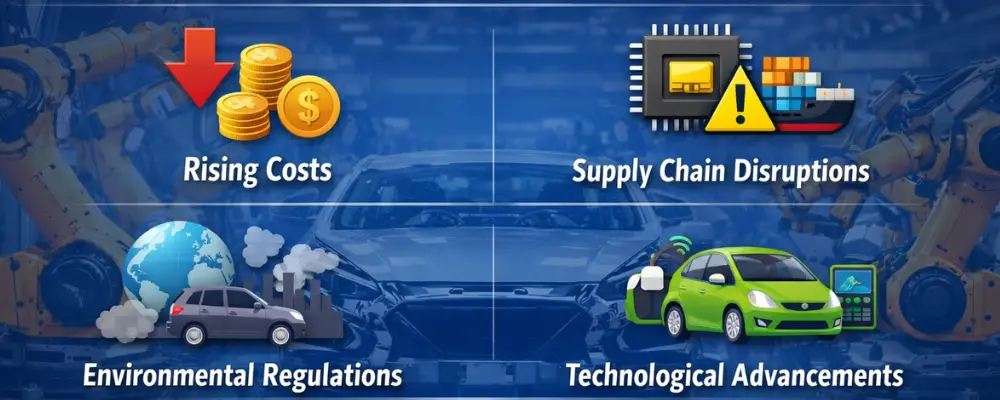
    The automotive industry is entering one of its most critical phases in history. According to McKinsey, over 70% of auto executives believe the industry will face more disruption in the next five years than it did in the past fifty. This disruption is driven by rapid technological change, stricter environmental rules, rising Automotive costs, and shifting consumer expectations.

    For automakers, these challenges are not just obstacles; they are turning points. Companies that adapt quickly will thrive, while those that fail to respond risk losing relevance. Below, we break down the top 6 automotive industry challenges for 2026, along with practical solutions that can help businesses stay ahead.

    Speed to Market for New Vehicle Technologies

    Innovation is moving faster than ever. Electric vehicles, autonomous driving, and connected car features are no longer futuristic ideas; they are becoming mainstream. Yet, consumers are impatient. Research published on ResearchGate shows that 62% of customers expect new car models or updates every year.

    This expectation creates enormous pressure on automakers. Traditional development cycles, which often take years, are no longer acceptable. Companies must balance speed with safety, ensuring that new technologies meet regulatory standards while still reaching the market quickly.

    • Problem: Long testing and approval processes delay launches, frustrating customers and reducing sales.
    • Solution: Automakers can adopt agile design methods, invest in faster testing technologies, and form partnerships with tech firms to accelerate innovation. By streamlining development, they can meet consumer demand without compromising safety.

    Cost Management

    Managing costs has always been a challenge, but in 2026, it has become a crisis. Prices of raw materials such as steel, lithium, and semiconductors have surged. A ResearchGate study highlights that automotive manufacturers faced an 18% rise in raw material costs in 2024. Inflation, labour expenses, and energy costs add even more pressure.

    For automakers, this means shrinking profit margins and higher car prices for consumers. If costs are not controlled, affordability becomes a major issue, limiting sales and slowing growth.

    Problem: Rising costs reduce profitability and make vehicles less affordable for buyers.

    Solution: Companies can adopt lean manufacturing, negotiate smarter supplier contracts, and explore cost‑sharing partnerships. By focusing on efficiency and smarter sourcing, automakers can protect margins while keeping cars affordable.

    Compliance and Regulatory Pressures

    Governments worldwide are tightening rules on emissions, safety, and sustainability. A ResearchGate analysis found that 90% of automakers are directly impacted by stricter global standards. These rules often require redesigning vehicles, investing in cleaner technologies, and meeting complex reporting requirements.

    While compliance is essential, it adds high costs and slows production. Automakers must not only meet current standards but also anticipate future ones, especially as countries push toward net‑zero emissions.

    • Problem: Meeting new regulations requires costly redesigns and slows down production.
    • Solution: Early adoption of green technologies, proactive compliance planning, and investment in sustainable innovation can reduce risks. Companies that lead in sustainability will gain a competitive edge.

    Supply Chain Disruptions

    The supply chain remains fragile even after years of recovery efforts. McKinsey and AlixPartners estimate that the global chip shortage caused over $210 billion in losses between 2021 and 2022. Similar risks continue with batteries, rare earth materials, and shipping delays.

    A single missing part can halt entire production lines, leaving customers waiting and companies losing billions. In a world where supply chains are global and complex, resilience is no longer optional; it is a survival strategy.

    • Problem: Delays in parts lead to production halts, lost revenue, and unhappy customers.
    • Solution: Automakers must diversify suppliers, invest in local manufacturing, and use predictive analytics to anticipate disruptions. Building stronger supply chains ensures stability and customer satisfaction.

    Workforce & Talent Shortage

    The automotive industry is not just about machines; it’s about people. Yet, finding skilled workers is harder than ever. A ResearchGate study on AI in automotive engineering shows that 65% of auto companies struggle to hire talent in areas like EV technology, robotics, and AI.

    Without the right skills, innovation slows, costs rise, and companies risk falling behind competitors. The talent gap is one of the most overlooked but critical challenges facing the industry.

    • Problem: Lack of skilled talent slows innovation and increases costs.
    • Solution: Automakers can invest in training programs, partner with universities, and improve employee retention strategies. Building a strong workforce ensures long‑term competitiveness.

    Digital Transformation

    Digital change is reshaping every part of the automotive industry. From online car sales to AI‑driven factories, digital tools are no longer optional. McKinsey reports that 70% of auto firms believe digital adoption is the key to long‑term survival.

    Companies that fail to embrace digital risk inefficiency, poor customer experiences, and missed opportunities. Digital transformation is not just about technology; it’s about creating a seamless experience for customers and improving operations across the board.

    • Problem: Slow adoption of digital systems creates inefficiency and lost opportunities.
    • Solution: Investing in cloud platforms, AI, and customer‑friendly digital tools ensures growth. Companies that embrace digital will be more agile, efficient, and competitive. A modern dealership management solution also supports this shift by helping automakers and dealers align operations and deliver better customer experiences.

    3 Trends for the Automotive Industry

    3 Trends for the Automotive Industry

    The automotive industry is changing fast. Three major trends are shaping how cars are bought, sold, and experienced in 2026.

    Online Vehicle Sales

    Car buying is moving online. Customers now browse, compare, and even purchase vehicles digitally, making convenience and transparency essential for car dealers.

    Artificial Intelligence Assistants

    AI development is transforming the driving and buying experience. From voice‑activated in‑car systems to AI chatbots guiding purchases, smarter tools are becoming standard.

    Everybody Wants a Used Car

    Demand for used cars is rising as new models get more expensive. Certified pre‑owned programs and digital platforms are helping meet this growing need.

    Conclusion

    The automotive industry is entering a period of rapid change. Challenges such as rising costs, stricter regulations, fragile supply chains, workforce shortages, and digital transformation are reshaping the way vehicles are designed, manufactured, and sold. These pressures may seem daunting, but they also open the door to innovation and new opportunities.

    Automakers that respond quickly by embracing agile development, managing costs effectively, investing in sustainability, strengthening supply chains, building skilled teams, and adopting digital tools will be best positioned to thrive. The future of mobility will be defined not just by overcoming obstacles, but by reimagining how the industry serves customers and society.

    2026 is not simply about survival; it is about transformation. Companies that adapt now will lead the way into a smarter, greener, and more connected automotive future.

    FAQs

    What are the biggest challenges facing the automotive dealership industry in 2026? 

    Dealerships face rising costs, stricter regulations, supply chain issues, and shifting consumer expectations.

    How is digital transformation affecting the automotive industry? 

    It’s streamlining operations, enabling online sales, and improving customer experiences through smarter digital tools.

    Why is cost management becoming a major problem for the automotive industry? 

    Raw material prices, labour costs, and inflation are squeezing margins, making affordability harder to maintain.

    What role does AI play in solving automotive industry issues in 2026? 

    AI supports predictive analytics, automates processes, and enhances customer engagement both online and in‑car.

    How are consumer habits changing in the automotive industry?

    Buyers demand faster innovation, prefer online shopping, and increasingly choose affordable used or certified cars.

  • Cost of Automotive AI Agent Development in the USA

    Cost of Automotive AI Agent Development in the USA

    Why Automotive AI Agent Costs Are Unique

    The cost of developing AI agents in the automotive industry is fundamentally different from building generic AI solutions. U.S. automotive enterprises operate in a high‑complexity environment that includes connected vehicles, manufacturing systems, dealership platforms, regulatory compliance, and massive volumes of real‑time data.

    As Generative AI and AI agents in Automotive move from pilots to production, decision‑makers need a realistic understanding of where the money goes and what actually drives cost. This cluster blog breaks down the true cost structure of automotive AI agent development in the USA, helping OEMs, Tier‑1 suppliers, dealerships, and mobility companies plan smarter investments.

    What Makes Automotive AI Agent Development More Expensive?

    Automotive AI agents are not simple chat interfaces. They act as autonomous digital workers that interact with vehicles, factories, service centers, and enterprise systems.

    Cost increases due to:

    • Safety‑critical decision environments
    • Large volumes of structured and unstructured vehicle data
    • Real‑time and low‑latency requirements
    • Integration with legacy automotive systems
    • Security, compliance, and auditability needs

    These factors make cost planning essential before development begins.

    Core Cost Components of Automotive AI Agent Development

    1. Use‑Case Definition and AI Strategy

    Automotive enterprises often fail not because of technology, but because of poorly defined use cases. The first cost layer involves identifying where AI agents can deliver measurable ROI.

    Typical automotive use cases include:

    • Predictive maintenance agents
    • AI service advisors
    • Manufacturing quality agents
    • Dealership sales and inventory agents
    • Supply chain optimization agents

    Estimated Cost (USA): $10,000 – $30,000

    This phase reduces downstream rework and prevents over‑engineering.

    2. Generative AI Model Selection and Setup

    Most U.S. automotive companies leverage existing foundation models and customize them rather than building models from scratch.

    Cost drivers include:

    • Commercial vs open‑source LLM selection
    • Private vs public cloud deployment
    • Token usage and concurrency needs

    Estimated Cost: $5,000 – $25,000 (initial)

    In Generative AI in Automotive, RAG‑based approaches are favored because vehicle manuals, diagnostics, and service data change frequently.

    3. Data Engineering and RAG Implementation

    Data is the largest cost driver in automotive AI agent development. AI agents must retrieve accurate, real‑time information from multiple sources.

    Automotive data sources include:

    • Vehicle telemetry and sensor data
    • Service histories and repair logs
    • Manufacturing quality reports
    • Dealer management systems (DMS)

    Estimated Cost: $30,000 – $90,000

    This includes data pipelines, vector databases, embeddings, and retrieval optimization.

    4. AI Agent Logic and Decision Workflows

    This layer defines how the AI agent reasons, escalates decisions, and takes action.

    Examples:

    • Approving or recommending service actions
    • Triggering manufacturing alerts
    • Updating dealership pricing or inventory

    Estimated Cost: $25,000 – $75,000

    Multi‑agent orchestration increases cost but unlocks higher automation and scalability.

    5. Automotive System Integrations

    AI agents must integrate with existing automotive platforms, many of which are legacy systems.

    Common integrations include:

    • ERP and finance systems
    • DMS platforms
    • PLM and MES systems
    • IoT and vehicle data platforms

    Estimated Cost: $20,000 – $60,000

    Integration complexity is a major differentiator between pilot projects and enterprise deployments.

    6. Security, Compliance, and Governance

    In the U.S. automotive industry, AI agents must meet strict requirements for data security, explainability, and auditability.

    Key cost areas:

    • Role‑based access controls
    • Human‑in‑the‑loop approvals
    • Audit trails and monitoring
    • Private or hybrid cloud security

    Estimated Cost: $10,000 – $35,000

    This layer protects enterprises from regulatory and reputational risk.

    Automotive ai agent
    Automotive ai agent

    Total Cost Estimates for Automotive AI Agents in the USA

    Deployment ScopeEstimated Cost Range
    Pilot (Single Use Case)$70,000 – $130,000
    Multi‑Department Agent$150,000 – $300,000
    Enterprise‑Scale AI Agent$300,000 – $600,000+

    Automotive enterprises typically start with a pilot and expand once ROI is proven.

    Ongoing Costs After Deployment

    AI agent development does not end at launch. Ongoing costs include:

    • Cloud infrastructure and inference
    • Data refresh and RAG tuning
    • Model updates and performance optimization
    • Security audits and compliance updates

    Annual maintenance costs usually range between 15–30% of initial development cost.

    How Automotive Enterprises Reduce AI Agent Development Costs

    Leading U.S. automotive companies control costs by:

    • Using modular AI agent architectures
    • Reusing RAG pipelines across use cases
    • Prioritizing high‑ROI workflows
    • Avoiding excessive fine‑tuning

    Cost efficiency is driven by architecture decisions made early in the project.

    How Hudasoft Helps Automotive Enterprises Control AI Costs

    Hudasoft specializes in building cost‑optimized AI agents for the automotive industry.

    Our approach focuses on:

    • Right‑sizing AI agent architecture
    • Leveraging RAG for dynamic automotive data
    • Designing scalable, reusable components
    • Ensuring security and compliance from day one

    We help U.S. automotive enterprises move from experimentation to production—without runaway costs.

    Conclusion: Cost Transparency Enables Smarter AI Investment

    Understanding the cost breakdown of automotive AI agent development allows enterprises to invest with confidence. In the U.S. automotive market, AI agents are becoming strategic assets, not optional tools.

    Organizations that plan costs realistically, architect intelligently, and partner with experienced AI teams will gain a lasting competitive advantage.

    Speak with Hudasoft to get a tailored cost estimate for AI agent development in your automotive organization.

  • Cost of AI Agent Development in the USA: A Practical Enterprise Guide

    Cost of AI Agent Development in the USA: A Practical Enterprise Guide

    Why AI Agent Cost Matters More Than Ever

    As enterprises across the United States accelerate adoption of Generative AI and AI agents, one question consistently dominates executive discussions: How much does it actually cost to develop an AI agent—and what drives that cost?

    For the automotive industry in particular, AI agents are no longer experimental tools. They are being deployed across manufacturing, supply chain, dealerships, after-sales service, connected vehicles, and mobility platforms. However, the cost of developing an AI agent varies widely depending on architecture, scale, data maturity, and business objectives.

    This blog provides a realistic, enterprise-focused breakdown of the cost of developing AI agents in the USA, with a specific lens on Generative AI in Automotive use cases.

    What Do We Mean by an AI Agent?

    An AI agent is not a chatbot or a simple automation script. In enterprise environments, an AI agent is an autonomous, goal-driven system that can reason, retrieve data, make decisions, and take actions across multiple systems.

    A production-grade AI agent typically includes:

    • A large language model (LLM)
    • Retrieval-Augmented Generation (RAG) layer
    • Business rules and decision logic
    • Integration with enterprise systems (ERP, DMS, PLM, CRM, IoT)
    • Security, governance, and monitoring layers

    Each of these components contributes to the overall cost.

    Core Cost Components of Developing an AI Agent in the USA

    1. AI Architecture Design and Consulting

    Before any development begins, enterprises must invest in architecture design. This phase defines whether the AI agent will use RAG, fine-tuning, or a hybrid approach, and how it will integrate with existing systems.

    Typical Cost (USA):

    • $15,000 – $40,000

    This includes solution architecture, data assessment, security planning, and use-case prioritization. For automotive enterprises, this phase is critical due to regulatory, safety, and system complexity.

    2. Model Selection and Generative AI Strategy

    Most enterprises do not build foundation models from scratch. Instead, they leverage commercial or open-source LLMs and customize them for specific use cases.

    Cost drivers include:

    • Choice of LLM (commercial vs open-source)
    • Fine-tuning vs RAG-based approaches
    • Token usage and inference volume

    Typical Cost Range:

    • $5,000 – $25,000 (initial setup)
    • Ongoing usage costs based on scale

    In Generative AI in Automotive, RAG is often preferred because vehicle data, service manuals, and operational knowledge change frequently.

    3. Data Engineering and RAG Implementation

    Data is the most expensive and time-consuming part of AI agent development. Automotive enterprises deal with vast amounts of structured and unstructured data—vehicle telemetry, diagnostic logs, service records, warranties, and customer interactions.

    RAG implementation costs include:

    • Data ingestion and cleaning
    • Vector database setup
    • Embedding pipelines
    • Retrieval optimization

    Typical Cost (USA):

    • $30,000 – $80,000

    Well-designed RAG architectures significantly reduce hallucinations and improve reliability in AI agents used for automotive operations.

    4. AI Agent Logic and Workflow Automation

    This layer defines what the AI agent actually does—how it makes decisions, triggers actions, and collaborates with humans.

    Examples in automotive:

    • A service agent scheduling maintenance
    • A manufacturing agent flagging production anomalies
    • A dealership agent optimizing inventory pricing

    Development Cost:

    • $25,000 – $70,000

    The complexity of workflows directly impacts cost. Multi-agent systems increase value but require higher upfront investment.

    5. Enterprise System Integrations

    AI agents must integrate seamlessly with existing automotive systems such as:

    • ERP (finance, procurement)
    • DMS (dealership operations)
    • PLM (engineering data)
    • CRM (customer engagement)
    • IoT platforms (vehicle and factory data)

    Integration Cost:

    • $20,000 – $60,000

    Legacy systems and custom APIs increase integration effort, especially common in large U.S. automotive enterprises.

    6. Security, Compliance, and Governance

    In the U.S. automotive industry, AI agents must comply with strict security, data privacy, and operational governance requirements.

    This includes:

    • Role-based access control
    • Audit logs and explainability
    • Human-in-the-loop approvals
    • Private or hybrid cloud deployment

    Typical Cost:

    • $10,000 – $30,000

    Skipping this layer reduces short-term costs but significantly increases long-term risk.

    Total Cost Estimates: AI Agent Development in the USA

    AI Agent ScopeEstimated Cost Range
    Pilot / Single Use Case$60,000 – $120,000
    Department-Level AI Agent$120,000 – $250,000
    Enterprise-Scale AI Agent$250,000 – $500,000+

    Automotive enterprises often start with a focused pilot—such as service diagnostics or dealership operations—before scaling to multi-agent systems.

    Ongoing Cost of AI Agent Development to Consider

    Developing an AI agent is not a one-time expense. Ongoing costs include:

    • Cloud infrastructure and inference
    • Model updates and retraining
    • Data refresh and RAG optimization
    • Monitoring and performance tuning
    • Security updates and compliance audits

    For Generative AI and AI agents in Automotive, ongoing costs typically range from 15–30% of the initial build cost annually.

    How Automotive Enterprises Optimize AI Agent Costs

    Leading U.S. automotive companies reduce AI agent costs by:

    • Using RAG instead of heavy fine-tuning
    • Reusing agent components across departments
    • Starting with high-ROI workflows
    • Designing modular, scalable architectures

    Cost optimization is as much an architectural decision as a budgetary one.

    How Hudasoft Helps Control AI Agent Development Costs

    Hudasoft specializes in building enterprise-grade AI agents for the automotive industry with a strong focus on cost efficiency, scalability, and governance.

    We help organizations:

    • Identify the right use cases with measurable ROI
    • Choose cost-effective Generative AI architectures
    • Design scalable AI agent frameworks
    • Deploy securely in U.S.-compliant environments

    Our approach ensures you invest where it matters—without overengineering or unnecessary spend.

    Conclusion: Cost Is Strategic, Not Just Technical

    The cost of developing AI agents in the USA depends on far more than technology choices. It reflects strategic decisions around scale, data, governance, and long-term vision.

    For automotive enterprises, AI agents are becoming foundational digital assets. Those who invest wisely today will gain operational efficiency, resilience, and competitive advantage tomorrow.

  • AI Agents in Automotive: The New Digital Workforce for U.S. OEMs and Dealers

    AI Agents in Automotive: The New Digital Workforce for U.S. OEMs and Dealers

    Why AI Agents in Automotive Are Replacing Manual Workflows Across the U.S. Automotive Industry

    The Automotive Workforce Is Going Digital

    The U.S. automotive industry is undergoing one of its most significant transformations since the introduction of automation on factory floors. While robotics and traditional automation streamlined physical processes, a new layer of intelligence is now redefining how decisions are made, workflows are executed, and customers are served. This shift is being powered by AI agents autonomous, goal-driven software systems capable of reasoning, learning, and acting across complex automotive operations.

    For U.S. OEMs, Tier-1 suppliers, dealerships, and mobility companies, AI agents represent a new digital workforce. Unlike traditional software or rule-based automation, AI agents can operate independently, collaborate with humans, and continuously optimize outcomes. As labor shortages, cost pressures, and data complexity increase, AI agents are rapidly replacing manual workflows across the automotive value chain.

    This blog explores how AI agents are transforming the U.S. automotive industry, where they deliver the most value, and why forward-looking enterprises are investing in agent-based AI architectures.

    What Are AI Agents?

    AI agents are intelligent software entities designed to perform tasks autonomously to achieve specific objectives. Powered by large language models (LLMs), machine learning, and enterprise data systems, AI agents can:

    • Interpret natural language instructions
    • Retrieve and reason over large volumes of data
    • Make decisions based on business rules and learned patterns
    • Execute actions across enterprise systems
    • Learn and improve over time through feedback

    Unlike chatbots or simple automation scripts, AI agents operate across workflows rather than isolated tasks. They can coordinate with other agents, escalate decisions to humans when required, and adapt to changing conditions—making them ideal for complex automotive environments.

    Why the U.S. Automotive Industry Is Adopting AI Agents

    The U.S. automotive sector faces a unique combination of challenges that make AI agents not just useful, but necessary:

    Rising operational costs, skilled labor shortages, increasing product complexity, connected vehicle data explosion, and heightened customer expectations are pushing organizations to rethink how work gets done.

    AI agents address these challenges by acting as intelligent digital workers that operate 24/7, scale instantly, and reduce dependency on manual intervention. For automotive enterprises managing thousands of SKUs, service requests, compliance requirements, and customer interactions, AI agents bring speed, consistency, and intelligence to operations.

    AI Agents Across the Automotive Value Chain

    AI Agents for Automotive Manufacturing

    In U.S. manufacturing plants, AI agents are transforming production intelligence. These agents continuously analyze machine data, quality metrics, and production schedules to identify inefficiencies before they become costly issues.

    AI agents support:

    • Predictive maintenance by identifying early signs of equipment failure
    • Quality control through real-time defect pattern detection
    • Production planning optimization based on demand signals
    • Root cause analysis for manufacturing anomalies

    By autonomously monitoring and responding to production conditions, AI agents reduce downtime, improve yield, and support lean manufacturing initiatives.

    Automotive AI Agents

    AI Agents for Supply Chain and Logistics

    Supply chain volatility has become a defining challenge for the U.S. automotive industry. AI agents enable proactive, data-driven supply chain management by continuously monitoring inventory levels, supplier performance, and logistics constraints.

    These agents can:

    • Forecast demand with higher accuracy
    • Recommend supplier reallocations during disruptions
    • Optimize inventory levels across locations
    • Automate procurement and replenishment workflows

    The result is a more resilient, adaptive supply chain that responds in real time to market and operational changes.

    AI Agents in Automotive Dealership Operations

    Dealerships are among the fastest adopters of AI agents in the U.S. automotive ecosystem. Manual processes in sales, inventory, financing, and customer follow-ups are increasingly being replaced by intelligent agents.

    AI agents in dealerships handle:

    • Inventory optimization and pricing recommendations
    • Lead qualification and follow-up automation
    • Financing and credit pre-check workflows
    • Sales performance insights and forecasting

    These agents help dealerships close deals faster, reduce operational overhead, and deliver a more personalized customer experience.

    AI Agents in After-Sales and Service

    After-sales service is a major revenue driver for U.S. automotive businesses. AI agents are redefining service operations by acting as intelligent service advisors.

    Service-focused AI agents can:

    • Analyze vehicle data and maintenance history
    • Recommend service actions proactively
    • Schedule service appointments automatically
    • Assist technicians with diagnostics and repair guidance

    By integrating Generative AI in Automotive systems with real-time vehicle and service data, AI agents improve first-time fix rates and customer satisfaction.

    AI Agents vs Traditional Automation

    Traditional automation relies on predefined rules and rigid workflows. While effective for repetitive tasks, it struggles with variability and complexity—both common in automotive operations.

    AI agents, in contrast, are adaptive and context-aware. They reason over data, understand intent, and dynamically choose actions. This makes them better suited for scenarios involving exceptions, judgment calls, and cross-functional coordination.

    For U.S. automotive enterprises, this shift means moving from static automation to intelligent orchestration of work.

    Architecture Behind Automotive AI Agents

    Modern automotive AI agents are typically built using a layered architecture:

    • Large Language Models for reasoning and interaction
    • Retrieval-Augmented Generation (RAG) for accessing real-time enterprise data
    • Business logic and policy engines for governance
    • Integration layers connecting ERP, DMS, PLM, CRM, and IoT systems

    This architecture ensures that AI agents remain accurate, secure, and aligned with enterprise processes—critical for regulated and safety-sensitive automotive environments.

    Security, Compliance, and Trust

    For U.S. automotive organizations, trust is non-negotiable. AI agents must operate within strict security, compliance, and data governance frameworks.

    Enterprise-grade AI agent deployments include:

    • Private or hybrid cloud environments
    • Role-based access controls
    • Audit logs and explainability layers
    • Human-in-the-loop approval mechanisms

    These measures ensure AI agents augment human teams without introducing risk.

    The Business Impact of AI Agents

    Organizations deploying AI agents across automotive operations report measurable benefits:

    • Reduced operational costs through automation of knowledge work
    • Faster decision-making and response times
    • Improved customer satisfaction and retention
    • Increased scalability without proportional headcount growth

    AI agents are no longer experimental—they are becoming a core component of digital transformation strategies across the U.S. automotive industry.

    How Hudasoft Enables AI Agents for Automotive Enterprises

    Hudasoft designs and implements enterprise-grade AI agent solutions tailored for the automotive sector. Our approach focuses on:

    • Identifying high-impact workflows for AI agent deployment
    • Designing scalable, secure AI architectures
    • Integrating agents with existing automotive systems
    • Ensuring compliance, governance, and long-term maintainability

    From OEMs and suppliers to dealerships and mobility platforms, Hudasoft helps U.S. automotive organizations build AI agents that deliver real business value.

    Conclusion: The Future of Automotive Work Is Agent-Driven

    AI agents represent the next evolution of digital transformation in the U.S. automotive industry. As complexity increases and margins tighten, enterprises that adopt AI agents as a digital workforce will gain a decisive competitive advantage.

    The question is no longer whether AI agents belong in automotive operations—but how quickly organizations can deploy them at scale.

    Partner with Hudasoft to design and deploy enterprise-grade AI agents tailored for your automotive business in the USA.

  • Top 10 Challenges in Dealership Management in 2026

    Top 10 Challenges in Dealership Management in 2026

    Walk into a dealership today, and you’ll notice something: it doesn’t feel like the dealerships of the past. Screens, apps, online reviews, and customer expectations are shaping every decision. Selling cars is no longer just about handing over keys; it’s about managing a complex business that runs on both people and technology.

    That’s where the challenges in dealership management come in. In 2026, operations have grown more complicated than ever. Dealers are navigating digital transformation, unpredictable markets, and customers who expect speed, transparency, and personalization at every step. It’s a balancing act, and the stakes are high.

    So, let’s explore the blog and break down the biggest dealership challenges of 2026, from car dealership struggles to auto dealership hurdles, and see how smart strategies can turn these obstacles into opportunities.

    The Shift from Traditional to Digital Dealerships

    Buying a car isn’t what it used to be. Customers no longer start their journey by walking into a showroom; they begin online. From browsing models on websites to comparing financing options through apps, the rise of online car buying trends has completely reshaped the way auto dealership digital transformation operates.

    Digital showrooms now act as the first point of contact. A customer can explore vehicles, check availability, and even schedule a test drive without leaving home. This shift means dealers must think beyond physical spaces and embrace omnichannel experiences, blending online convenience with in‑store service.

    But here’s the catch: moving from traditional to digital isn’t just about setting up a website. It requires strategic planning and technology adoption. Dealers need systems that connect inventory, sales, and customer data seamlessly. 

    They must train staff to use digital tools effectively and ensure that every touchpoint, whether online or offline, delivers the same level of trust and transparency.

    This digital transformation is one of the biggest dealership challenges in 2026. Those who adapt gain a competitive edge, while those who resist risk losing customers to faster, more tech‑savvy competitors.

    Key Dealership Challenges Shaping 2026

    Running a dealership in 2026 isn’t just about selling cars; it’s about overcoming a new set of hurdles that shape the Future of the auto dealership business. Let’s explore the biggest challenges in dealership management and how they impact dealers currently.

    1. Adapting to Digital Transformation

    Dealers must move beyond traditional showrooms. Online car buying, digital showrooms, and omnichannel experiences are now the norm. Those who fail to embrace technology risk losing customers to competitors who are faster and more connected.

    2. Customer Retention and Loyalty

    Winning a sale is only half the battle. The real challenge is keeping customers coming back. With so many options available, building trust and loyalty through personalized service is more important than ever.

    3. Inventory Management and Supply Chain Disruptions

    Global supply chain issues continue to affect availability. Too much inventory ties up capital, while too little frustrates buyers. This is where strong inventory management becomes essential. With smart forecasting and flexible sourcing are key to solving this dealership challenge.

    4. Staff Training and Talent Retention

    Employees are the backbone of any dealership. But high turnover and lack of training can hurt performance. Investing in staff development not only boosts morale but also improves customer satisfaction.

    5. Pricing Pressure and Profit Margins

    Customers expect transparent pricing, while rising costs squeeze margins. Dealers must balance competitive pricing with profitability, a constant car dealership challenge in today’s market.

    6. Regulatory Compliance and Data Security

    From financial regulations to customer data protection, compliance is non‑negotiable. One slip can damage reputation and lead to costly penalties. Strong systems and clear processes are essential.

    7. Technology Integration and System Compatibility

    Dealerships often juggle multiple platforms, CRM, inventory, financing, and marketing tools. Making them work together smoothly is a major auto dealership challenge that requires strategic planning.

    8. Evolving Customer Buying Behaviour

    Today’s buyers research online, expect instant answers, and value transparency. Dealers must adapt to these behaviours by offering seamless digital and in‑store experiences.

    9. Marketing and Lead Conversion Challenges

    Generating leads is one thing; converting them is another. With digital ads, social media, and SEO in play, dealerships must sharpen their marketing strategies to stand out in a crowded space.

    10. Sustainability and Electric Vehicle (EV) Transition

    The shift to EVs is no longer optional. Dealers must prepare for new inventory, charging infrastructure, and customer education. Sustainability isn’t just a trend; it’s the future of automotive retail.

    How to Overcome Them

    Challenges may feel overwhelming, but the right strategies can turn them into opportunities. Here’s how to start an online car dealership in 2026 and stay ahead:

    1. Implementing Modern Dealership Management Systems (DMS)

    A modern dealership management system is like the backbone of operations. It connects sales, inventory, finance, and customer automotive data analytics into one platform. With a DMS, dealers can reduce errors, save time, and make smarter decisions.

    2. Using Data Analytics to Improve Sales Forecasting

    Data isn’t just numbers; it’s insight. By analyzing customer behavior, market trends, and past sales, dealers can forecast demand more accurately. This helps avoid overstocking or understocking and keeps profits steady.

    3. Upskilling Teams and Promoting a Customer‑First Mindset

    Technology alone isn’t enough. Staff need training to use digital tools effectively while delivering personalized service. A customer‑first mindset builds trust, loyalty, and repeat business, the real drivers of long‑term success.

    Conclusion

    The road ahead for dealerships in 2026 is full of twists and turns. From digital transformation to customer loyalty, from inventory headaches to the EV transition, the challenges in dealership management are real, but they don’t have to hold you back.

    Dealers who adopt modern systems, data‑driven insights, and a customer‑first mindset will not only survive but thrive. And this is where Hudasoft makes a difference. Their dealership management solutions are built to handle it all, streamlining operations, improving forecasting, empowering teams, and delivering the seamless experiences today’s buyers expect.

    In short, every dealership challenge, whether it’s pricing pressure, compliance, or adapting to new buying behaviours, can be turned into an opportunity with the right tools. Hudasoft helps Dealership Management Solution stay ahead of the curve, making complex operations simple and future‑ready.

    The future of automotive retail belongs to those who adapt. With Hudasoft by your side, you’re not just managing challenges, you’re building a stronger, smarter dealership for tomorrow.

    FAQs

    What are the biggest challenges in dealership management in 2026? 

    The top challenges include adapting to digital transformation, managing inventory disruptions, retaining skilled staff, meeting customer expectations, and preparing for the electric vehicle (EV) transition.

    How can dealerships overcome digital transformation challenges? 

    By adopting modern dealership management systems (DMS), integrating technology across operations, and using data analytics to forecast sales and improve customer experiences.

    Why is customer retention so important for dealerships today? 

    With more competition and online options available, retaining customers ensures long‑term profitability. Building loyalty through personalized service and transparent communication helps dealerships stand out.

    How does Hudasoft help dealerships manage these challenges?

    Hudasoft provides smart dealership management solutions that streamline operations, improve forecasting, enhance staff performance, and deliver seamless customer experiences, making complex challenges easier to handle.

  • Automation In Real Estate: Smarter Property Management

    Automation In Real Estate: Smarter Property Management

    Have you ever stopped to think about how much time real estate agents spend on small, repetitive tasks every single day? From updating property listings to sending reminders and following up with clients, these tasks can take hours. Now imagine if most of this work could be done automatically, without losing the personal touch that makes real estate so unique.

    That’s where automation in real estate comes in. It’s not just jargon; it’s a powerful way to save time, reduce stress, and make the entire buying and selling process smoother for both agents and clients. With smart apps, AI tools, and automated systems, real estate businesses can focus more on building relationships and closing deals, instead of drowning in paperwork or chasing leads manually.

    In this blog, we’ll explore how automation is changing the real estate industry, the role of apps and AI, and why agents who involve these tools are staying ahead of the competition. So, let’s dive in and discover how automation can reshape the future of real estate.

    What Is Automation in Real Estate?

    Automation in real estate means using smart tools, apps, and systems to handle tasks that agents or businesses used to do manually. Instead of spending hours on paperwork, emails, or updating property listings, automation takes care of these jobs quickly and accurately.

    For example, an automation in a real estate app can send reminders to clients, manage leads, or update listings without the agent lifting a finger. In bigger companies, automation in the real estate business might use AI to track market trends, predict property values, or even match buyers with the right homes.

    The goal is simple: save time, reduce mistakes, and let agents focus on building relationships and closing deals. Whether it’s through real estate AI automation, an automated real estate agent, or an automated system for real estate, these tools are changing how the industry works.

    Key Takeaways

    • Automation in real estate helps agents and businesses save time and reduce stress.
    • Apps and AI tools can handle routine tasks like reminders, listings, and client follow-ups.
    • An automated real estate agent or system makes workflows smoother and more reliable.

    How Does Real Estate Automation Work?

    Real estate automation works by using smart tools, apps, and systems to handle tasks that agents or businesses used to do manually. Instead of spending hours on emails, reminders, or updating property listings, automation takes care of these jobs in the background.

    For example:

    • An automation in a real estate app can send instant updates to clients, schedule meetings, and track leads.
    • A real estate AI automation tool can study market data, predict property values, and suggest the best time to buy or sell.
    • An automated real estate agent system can manage conversations, follow‑ups, and even initial client questions.

    All of these tools connect together to form an automated system for real estate, which makes the entire process smoother. Agents still play the key role of building trust and closing deals, but automation helps them save time and avoid mistakes.

    Benefits of Real Estate Automation

    The benefits of automation in real estate are clear and powerful. Here are some of the biggest advantages:

    • Time Savings: Routine tasks like sending emails or updating listings are done automatically.
    • Better Accuracy: Automation reduces human error in contracts, reminders, and data entry.
    • Improved Client Experience: Clients get faster responses, timely updates, and smoother communication.
    • Higher Productivity: Agents can focus on building relationships and closing deals instead of chasing paperwork.
    • Smart Insights: With real estate AI automation, agents can understand market trends and make better decisions.
    • Scalability: An automation in the real estate business can grow faster because systems handle more work without extra staff.

    In short, automation helps agents and businesses work smarter, not harder. It’s about combining human expertise with technology to deliver better results.

    Challenges of Real Estate Automation

    While automation brings numerous benefits, it also presents challenges that agents and businesses must understand. Using an automated system for real estate is not always smooth, and there are a few hurdles to watch out for:

    • High Setup Costs: Certain tools, particularly advanced real estate AI automation systems, can be costly to install and maintain. Small businesses may find it hard to invest at the start.
    • Learning Curve: Agents who are used to traditional methods may struggle to adapt to new apps or platforms. Even the best automation in real estate apps requires training and practice.
    • Loss of Personal Touch: Clients often want human interaction. Relying too much on an automated real estate agent can make the process feel less personal.
    • Data Security Risks: Automation systems handle sensitive client information. Without proper security, there’s a risk of data leaks or misuse.
    • Dependence on Technology: If the system fails or the app crashes, agents may face delays. Over‑reliance on automation can create problems when technology doesn’t work as expected.

    What’s the Solution?

    The challenges of automation in real estate can feel overwhelming, but the answer lies in using the right property management solution. These solutions bring together all the daily tasks of a real estate business into one simple system, making life easier for agents, property managers, and clients.

    With smart automation in a real estate app, you can:

    • Track rent payments and expenses automatically.
    • Send reminders to tenants and owners without manual effort.
    • Manage property listings and update them in real time.
    • Handle maintenance requests through an automated system for real estate.

    For bigger companies, real estate AI automation adds even more power. It can predict market trends, suggest rental prices, and even match properties with the right tenants. This makes a property management system not just a tool, but a complete support system for running an automation in the real estate business.

    An automated real estate agent or system doesn’t replace human expertise; it supports it. By taking care of repetitive tasks, property managers can spend more time building trust with clients and growing their business.

    Conclusion

    The real estate industry is changing quickly, and automation is becoming a key part of real estate digital transformation. By using smart tools like apps, AI, and property management solutions, agents and businesses can save time, reduce errors, and give clients a better experience.

    Automation is not about replacing people; it’s about supporting them. When routine tasks are handled by reliable systems, agents can focus on building trust, closing deals, and growing their business. Whether it’s managing listings, tracking leads, or handling property updates, automation makes the process smoother and more efficient.

    The future of real estate belongs to those who involve technology while keeping the human touch. With the right property management solution and automation tools, agents can stay ahead of the competition and deliver real value to their clients.

    FAQs

    What is automation in real estate, and how does it work?

    It uses apps and systems to handle routine tasks like listings, emails, and client follow‑ups automatically.

    Which is the best automation in a real estate app?

    The best app depends on your needs; some focus on lead tracking, others on property management or client communication.

    Can automation replace real estate agents?

    No. Automation supports agents by saving time and reducing errors, but human expertise and trust remain essential.

    How does real estate AI automation improve lead conversion?

    AI studies data, predicts buyer behaviour, and helps match leads with the right properties, boosting conversion rates.

    Is automation expensive for small real estate agencies?

    Some advanced tools can be costly, but many affordable property management solutions and apps are available for smaller agencies.

  • Top 10 Cloud-Based Dealership Management Systems

    Top 10 Cloud-Based Dealership Management Systems

    The Automotive industry is not the same anymore. Customers don’t just walk into a showroom and wait for a salesperson. They start online. They compare models, check prices, and even book test drives from their phones.

    This shift is called digital transformation. It’s changing how dealers sell cars, manage service, and connect with buyers. Dealers who use smart tools can track leads, manage stock, and deliver faster service.

    A cloud-based automotive DMS makes this change simple. It moves everything from paper and slow systems to one smart online platform. Sales teams see updates in real time, service staff get live schedules, and managers can check reports anytime. It’s not just technology; it’s a new way of running a dealership.

    Why Cloud Technology Matters in Dealership Management

    Running a dealership means handling vehicles, customers, and numbers all at once. Old systems make this hard. Cloud technology fixes that.

    With a DMS Cloud Solution for a car dealership, everything is online. No heavy servers, no waiting for updates. Just a system that works anywhere, anytime.

    Here’s why it matters:

    • Flexibility: Access data from the office, showroom, or even at home.
    • Speed: Updates happen instantly.
    • Security: Customer and sales data stay safe.
    • Integration: With Automotive Cloud Solution integration, your system connects with accounting, CRM, and marketing tools. That means less manual work and more focus on selling cars.

    Cloud isn’t just a trend. It’s the backbone of modern dealership management. Dealers who switch to cloud run smoother, faster, and smarter.

    What is a Cloud-Based DMS System?

    A cloud-based DMS (Dealer Management System) is like your dealership’s control center, but online. Instead of keeping everything on local computers or paper files, the system runs in the cloud. That means you can access it anytime, from anywhere, with just an internet connection.

    Think of it as a smart hub where sales, service, inventory, and customer data all live together. No more switching between different tools or waiting for updates. Everything is live, fast, and secure.

    For vehicle dealers, a cloud-based automotive DMS makes daily work simple. It helps track cars, manage deals, and keep customers happy. A digital DMS for a vehicle dealership also cuts down on errors and saves time, because the system updates in real time.

    And when you add cloud dealership software integration, the system connects with other tools like accounting or CRM. That way, your dealership runs smoother, with less manual work and more focus on selling vehicles.

    Top 10 Automotive DMS Platforms Compared

    Choosing the right Cloud‑enabled Automotive System can make or break a dealership. With so many options out there, it’s hard to know which one fits best. That’s why we’ve listed the top 10 cloud-based automotive DMS solutions, complete with features, pros and cons, and pricing details. Whether you run a small showroom or a big car dealership, these systems help you stay fast, connected, and ready for the future.

    DMS SystemKey FeaturesProsConsPricing & Support
    SpyneAI car imaging, 360° spinsBoosts online listingsLimited full DMS functionsCustom pricing, API support
    vAuto ProvisionReal‑time market data, pricing toolsFaster inventory turnoverFocused on used cars onlyCustom pricing, mobile access
    Dealer ERPFull dealership management, CRM, inventory, e‑commerce, predictive analyticsComprehensive, scalable, user‑friendlyMay require customization for small dealersCustom pricing, modular support
    DealerSocketSales, service, accountingScalable, OEM integrationsSupport response can be slowCustom pricing, wide support
    EleadCRM, lead tracking, and schedulingEasy to use, strong CRMMore CRM‑centricCustom pricing, dealer support
    DealerTrackInventory, finance, reportingFlexible, strong reportingHigher cost for small dealersCustom pricing, Cox support
    VinSolutionsCRM, dashboards, mobile appCustomizable, strong CRMInterface can feel complexQuotation pricing, training
    CDK DriveFull DMS, multi‑location supportRobust, flexibleBest for larger dealersCustom pricing, demo support
    Autosoft DMSSales, F&I, accounting, mobile appsMobile access, simple setupLimited advanced featuresCustom pricing, online support
    Reynolds & ReynoldsRetail Management System (RMS)Deep integration, strong dataPremium pricing, complexCustom pricing, dealer support

    Choosing the Right Cloud-Based DMS for Your Dealership

    Picking the right Automotive Cloud Solution for a Vehicle dealership is a big decision. The system you choose will shape how your team works, how customers feel, and how smoothly your business runs. Here’s what to keep in mind:

    Key Features to Look For

    • Inventory management: Track cars in real time.
    • CRM tools: Manage leads and customer communication.
    • Accounting integration: Keep finances connected.
    • Cloud-based DMS integration: Make sure the system talks to other tools like marketing or service apps.

    Vendor Reliability and Support

    A good system is only as strong as the company behind it. Look for vendors with:

    • Proven track record in automotive retail.
    • 24/7 support and training.
    • Regular updates and security patches.

    Migration and Training Considerations

    Switching to a new system can feel tough. Make sure your vendor offers:

    • Smooth migration from old data.
    • Step‑by‑step training for staff.
    • Ongoing support so your team feels confident.

    What Sets a DMS Apart

    Once you’ve looked at features, vendor support, and training, the next step is making sure the system you choose actually delivers on these promises. A good Cloud‑enabled Automotive System should be simple to use, offer smooth integration, and provide reliable support so your team never feels stuck. Security and scalability are equally important because your dealership needs a platform that grows with your business.

    This is where solutions like Hudasoft stand out. Designed with these essentials in mind, it helps dealerships streamline operations and improve customer experiences. If you’re exploring a trusted Dealership Management solution, make sure it covers these critical factors because the right choice will set your dealership up for long‑term success.

    Conclusion

    The automotive industry is changing fast, and dealerships that adapt with the right technology will stay ahead. Cloud-enabled automotive System is no longer a luxury; they’re the backbone of modern dealership operations. From inventory tracking and CRM tools to accounting integration and customer communication, the right system connects every part of your business in one place.

    The comparison of the top solutions shows that while features vary, the essentials remain the same: ease of use, reliable support, secure data, and smooth migration. Choosing wisely means your team works faster, customers enjoy a better experience, and your dealership grows with confidence.

    This is exactly why exploring a trusted Dealership Management solution matters. Platforms built with these priorities in mind, like Hudasoft, help dealerships move beyond old challenges and embrace a future that’s smarter, more connected, and ready for growth.

    The takeaway is clear: invest in a cloud-based DMS today, and you’re not just upgrading software, you’re freeing the future of your dealership.

    FAQs

    What is automotive data analytics, and why is it important? 

    Automotive data analytics is the process of analyzing vehicle, customer, and dealership data to improve decision‑making. It’s important because it helps reduce costs, boost sales, and enhance customer experiences.

    How is AI / Machine Learning used in automotive data analytics? 

    AI and machine learning identify patterns in large datasets, predict customer behavior, optimize inventory, and even forecast vehicle maintenance needs.

    What are the biggest challenges or risks in automotive data analytics?

    Key challenges include data privacy, integration across systems, high implementation costs, and ensuring data accuracy.

    How is data collected for automotive analytics? 

    Data is gathered from connected vehicles, dealership systems, customer interactions, IoT sensors, and service records.

    What are the future trends in automotive data analytics? 

    Future trends include predictive maintenance, personalized customer experiences, real‑time analytics from connected vehicles, and deeper AI integration.

  • Automotive Data Analytics: Key Benefits & Challenges

    Automotive Data Analytics: Key Benefits & Challenges

    The automotive world is changing fast. Cars are no longer just about engines and wheels; they are becoming smarter, connected, and data-driven. Every step, from design to sales, now uses insights pulled from data.

    Big data and AI play a huge role in this shift. They help car makers build safer vehicles, improve fuel efficiency, and even predict what customers want before they ask. In sales, AI tools guide dealers to understand buyer behavior and offer the right solutions at the right time.

    This is where automotive data analytics comes in. By turning raw numbers into clear insights, it supports better decisions across the industry. From predicting demand to improving customer experience, data analytics in the automotive industry is the engine driving growth and innovation.

    So, let’s start exploring how this data-driven journey is reforming the automotive industry and why it matters for the future.

    What is Automotive Data Analytics?

    Automotive data analytics means using data to make smarter decisions in the car industry. It’s about collecting numbers, patterns, and insights, then turning them into actions that improve how vehicles are built, sold, and experienced.

    The scope is wide:

    • Production: Data helps factories run smoothly, cut waste, and improve quality.
    • R&D (Research & Development): Engineers use vehicle data analytics to test new designs, predict performance, and speed up innovation.
    • Sales: Dealers rely on insights to understand customer needs, set the right prices, and boost sales.
    • Customer Experience: From connected cars to after-sales service, data shows what drivers want and how to keep them happy.

    In short, automotive big data analytics is the backbone of modern growth. It connects every part of the journey from the assembly line to the driver’s seat.

    Sources of Automotive Data

    Data in the automotive world comes from many places. Modern cars are like moving computers, and every part of them creates useful information.

    • Connected vehicles: Smart cars send data about speed, fuel use, and driver behavior.
    • Sensors: From brakes to engines, sensors track performance and safety.
    • Telematics: GPS and tracking systems show where cars go and how they are used.
    • CRM systems: Dealers collect customer data to understand buying habits and service needs.
    • Supply chain data: Factories and suppliers share numbers to keep production smooth and avoid delays.

    Together, these sources feed into big data analytics for automotive, giving companies a full picture of how cars are built, sold, and driven.

    Role of AI and Machine Learning in Data Analytics

    AI and machine learning take all this data and make sense of it. Instead of just storing numbers, they find patterns and predict what will happen next.

    • Predictive insights: AI can forecast demand, spot risks, and even predict when a car part might fail.
    • Automation: Routine tasks, like checking quality or managing inventory, can be handled automatically.
    • Pattern recognition: Machine learning spots trends in driver behavior, customer choices, and vehicle performance.

    This is why big data analytics in the automotive industry is so powerful. With AI and machine learning, companies don’t just react; they stay ahead.

    Why Data Analytics Matters in the Automotive Industry

    Enhancing Vehicle Design and Development

    Data is changing how cars are designed. Engineers use automotive data analytics to test safety features, improve performance, and make vehicles more fuel-efficient. Instead of guessing, they rely on real numbers from sensors, road tests, and customer feedback. This means cars are not only safer but also smarter and more eco-friendly.

    Streamlining Manufacturing and Supply Chain Operations

    Factories and suppliers run smoothly with data analytics in the automotive industry. Predictive maintenance spots problems before machines break down, saving time and money. Production lines are optimized to reduce waste and speed up delivery. Supply chain data helps avoid delays and cut costs, keeping everything on track from raw materials to finished cars.

    Enhancing Customer Experience and Loyalty

    Data doesn’t stop at the factory; it also improves the driver’s journey. Personalized marketing shows customers the right offers at the right time. Real-time service updates keep drivers informed about maintenance needs. Connected car insights reveal how people use their vehicles, helping brands to deliver better features and services. All of this builds trust and loyalty.

    Data-Driven Decision Making Across Dealerships

    Dealerships utilize automotive data analytics to gain insight into buyer behavior. They can see which models are popular, what price ranges work best, and how customers shop. This helps sales teams make more informed decisions, enhance service, and close deals more efficiently. With data guiding every step, dealerships stay competitive and customers feel valued.

    Top Use Cases of Data Analytics in the Automotive Industry

    Connected Vehicle Insights & Driver Behavior Analysis

    Modern cars generate massive amounts of data through sensors and telematics. Automotive data analytics helps track driver behavior, fuel usage, and vehicle performance. These insights improve safety features, enable personalized services, and support predictive maintenance.

    Smart Manufacturing & IoT-Based Quality Control

    Factories use automotive big data analytics combined with IoT devices to monitor production lines in real time. Data identifies defects early, reduces waste, and ensures consistent quality. Predictive analytics also helps schedule maintenance before machines fail, saving costs and downtime.

    Fleet Management & Route Optimization

    For logistics and transport companies, vehicle data analytics is essential. It optimizes routes, reduces fuel consumption, and improves delivery times. Fleet managers can monitor driver performance, track vehicle health, and cut operational expenses with data-driven decisions.

    Insurance Risk Scoring and Pricing Models

    Insurance providers rely on big data analytics for automotive to assess risk more accurately. By analyzing driver behavior, accident history, and vehicle usage, they can create personalized pricing models. This leads to fairer premiums and encourages safer driving habits.

    EV (Electric Vehicle) Performance Analytics

    Electric vehicles generate unique data on battery health, charging patterns, and energy efficiency. Big data analytics in the automotive industry helps manufacturers improve EV design, extend battery life, and enhance charging infrastructure. For drivers, it means better performance and lower costs.

    Key Benefits of Automotive Data Analytics Services

    Real-Time Monitoring and Predictive Maintenance

    With automotive big data analytics, companies can track vehicles in real time. Sensors and connected systems show how parts are working, and predictive tools warn when something might fail. This means fewer breakdowns, lower repair costs, and safer cars on the road.

    Improved Sales Forecasting and Inventory Management

    Dealers and manufacturers use automotive data analytics services to see what customers want and when. By studying buying trends, they can forecast sales more accurately. Inventory is managed better, too; no more overstocking or running out of popular models.

    Enhanced Safety through Predictive Insights

    Safety is one of the biggest wins. Data shows patterns in accidents, driver behavior, and vehicle performance. With automotive data analytics services, companies can predict risks and design cars that prevent problems before they happen.

    Optimized Marketing Campaigns and Lead Generation

    Marketing becomes smarter with data. Automotive data analytics services help brands target the right audience, create personalized offers, and track campaign success. This leads to stronger connections with customers and more qualified leads for sales teams.

    Challenges and Considerations

    Data Privacy and Cybersecurity Risks

    With so much data being collected, privacy and security are big concerns. Automotive data analytics depends on sensitive information from vehicles, customers, and supply chains. If this data is not protected, it can lead to breaches and loss of trust. Companies must invest in strong cybersecurity systems to keep data safe and follow strict privacy rules.

    Data Integration Across Platforms

    Data comes from many sources, connected cars, sensors, CRM systems, and supply chains. The challenge is bringing all this information together in one place. Without proper integration, insights can be lost or delayed. For data analytics in the automotive industry to work well, platforms must connect smoothly and share data in real time.

    Talent Gap and the Need for Skilled Data Analysts

    Even with the best tools, companies need skilled people to make sense of the data. There is a growing talent gap in the industry. Skilled analysts who understand both cars and data are in high demand. Without them, businesses may struggle to use automotive data analytics effectively. Training and hiring the right talent is key to success.

    What Hudasoft Is Doing in Automotive Data Analytics?

    Hudasoft is not just following the trend; it’s leading it. But what exactly is Hudasoft doing in this space? The company is helping automakers, dealers, and suppliers open the full power of automotive data analytics services. From real-time monitoring to predictive insights, they turn complex data into simple actions. It also supports dealerships with smart solutions like its dealership management solution, making sales and customer service more efficient. Whether it’s improving vehicle design, streamlining supply chains, or boosting customer loyalty, Hudasoft is asking the right questions and delivering the right answers through data-driven innovation.

    Conclusion

    Data has become the backbone of the current automotive industry. From design and manufacturing to sales and customer service, automotive data analytics is shaping every step of the journey. With AI, machine learning, and connected systems, companies can improve safety, boost performance, and deliver better experiences to drivers.

    Of course, challenges like privacy, integration, and the talent gap remain. But the benefits are clear: predictive maintenance, smarter sales forecasting, and stronger customer loyalty. That’s why data analytics in the automotive industry is now a must‑have, not just an option.

    Hudasoft is leading this change with advanced automotive data analytics services and smart tools like its dealership management solution, helping businesses turn data into action. Alongside this, they also provide automotive development services that support innovation in design, manufacturing, and customer experience. The future of cars and customer experiences will belong to those who embrace analytics. Hudasoft is ready to drive that future forward.

    FAQs

    What is automotive data analytics, and why is it important? 

    Automotive data analytics means using data from vehicles, customers, and operations to make smarter decisions. It’s important because it improves safety, performance, sales, and customer experience.

    How is AI / Machine Learning used in automotive data analytics? 

    AI and machine learning analyze huge amounts of data to find patterns, predict outcomes, and automate tasks. They help with predictive maintenance, demand forecasting, and personalized customer services.

    What are the biggest challenges or risks in automotive data analytics?

    The main challenges are data privacy, cybersecurity risks, integrating data from different platforms, and the shortage of skilled analysts.

    How is data collected for automotive analytics? 

    Data comes from connected vehicles, sensors, telematics systems, CRM platforms, and supply chain operations. These sources provide real-time insights across the industry.

    What are the future trends in automotive data analytics? 

    Future trends include wider use of AI, predictive safety systems, real-time monitoring, personalized driver experiences, and smarter dealership solutions.