
HACK LINKS - TO BUY WRITE IN TELEGRAM - @TomasAnderson777 Hacked Links Hacked Links Hacked Links Hacked Links Hacked Links Hacked Links cryptocurrency exchange vapeshop discount code vapewholesale affiliate link geek bar pulse x betorspin plataforma betorspin login na betorspin hi88 new88 789bet 777PUB Даркнет alibaba66 1xbet 1xbet plinko Tigrinho Interwin

الوسم: Automotive AI Agents

  • Automotive App Development Cost in 2026: A Complete Guide for Businesses

    Automotive App Development Cost in 2026: A Complete Guide for Businesses

    Developing an automotive app is no longer just a tech trend, it’s a strategic investment. As vehicles become more technologically advanced, automotive apps provide businesses with opportunities to enhance customer experiences, streamline operations, and boost revenue. But how much does it cost to develop an automotive app? The answer depends on your app’s features, complexity, and platform choices.

    How Much Does Automotive App Development Cost?

    The cost of developing an automotive app varies widely based on features, complexity, and integrations. On average:

    • Basic apps: $15,000 – $35,000
    • Moderate apps: $35,000 – $90,000
    • High-complexity apps: $90,000 – $150,000+

    The actual price can fluctuate depending on design requirements, technology stack, and post-launch services. Understanding what drives these costs helps businesses plan budgets more effectively.

    Key Factors That Influence Automotive App Development Cost

    Several factors directly affect the overall cost of automotive app development:

    Features and Functional Complexity

    Advanced features like real-time vehicle diagnostics, driver behavior analysis, or EV charging maps require complex coding and longer development time, increasing costs.

    UI/UX Design Requirements

    Apps with custom dashboards, animations, map-based interfaces, and interactive elements are more expensive than apps with basic templates.

    Technology Stack and Integrations

    The programming languages, frameworks, and third-party system integrations (IoT devices, GPS, real-time tracking) all impact development costs.

    Platform Choice

    Building apps for both Android and iOS platforms is more costly than single-platform development. Cross-platform solutions can help reduce costs by using a single codebase.

    Cost Breakdown by App Types and Features

    App TypeFeatures IncludedReason for CostEstimated Cost
    BasicSimple UI, login, booking, basic listingsMinimal backend work and no real-time integrations$15,000 to $35,000
    ModerateGPS, maps, real-time notifications, online payments, dashboardsSecurity for payments, APIs, and multiple screens required$35,000 to $90,000
    High-ComplexityIoT/OBD integrations, vehicle diagnostics, fleet tracking, AI/ML featuresComplex backend systems, real-time processing, expert developers$90,000 to $150,000+

    Additional Costs of Automotive App Development

    Beyond development, businesses should account for:

    • Unexpected Feature Upgrades: Adding features mid-development increases backend complexity and costs.
    • Third-party API Fees: High traffic apps incur higher API usage charges.
    • Licensing Costs: Legal compliance with GDPR, CCPA, and industry-specific certifications adds expense.
    • Server and Cloud Hosting: Data storage costs increase as the user base grows.
    • Post-Launch Maintenance: Regular updates and bug fixes are essential for long-term app performance.

    Explore cost of Automotive AI Agent Development in our blog.

    How to Reduce Automotive App Development Cost

    Even with a limited budget, businesses can develop reliable automotive apps by following these strategies:

    Prioritize MVP Features

    Focus on must-have features for your app’s first version. Avoid feature creep to reduce unnecessary costs.

    Use Prebuilt APIs

    Prebuilt APIs reduce development time, maintenance costs, and reliance on specialized developers.

    Choose the Right Development Approach

    For high performance, native apps are ideal. For lower budgets, cross-platform development offers cost-effective solutions for both iOS and Android.

    Why Choose Hudasoft for Automotive App Development?

    At Hudasoft, we specialize in developing scalable, user-friendly automotive apps tailored to your business needs. Our approach includes:

    • Identifying essential features to maximize ROI
    • Designing interactive prototypes for clear visualization
    • Providing post-launch support and maintenance for smooth app performance

    We ensure your automotive app is reliable, cost-effective, and built to grow with your business. With Hudasoft, you get a partner who understands the automotive industry and delivers solutions that help your business thrive.

    Automotive app development cost

    Conclusion

    Automotive app development requires careful budgeting and strategic planning. By understanding cost factors, prioritizing essential features, and choosing the right development approach, businesses can launch apps that are both effective and cost-efficient. Partnering with Hudasoft ensures your app meets quality standards while staying within budget.

    Whether you need a simple booking app or a high-complexity real-time fleet management system, Hudasoft can guide your project from concept to launch, providing innovative solutions that drive business growth.

    FAQs

    How long does it take to build an automotive app?

    • Basic apps: 2–3 months
    • Moderate apps: 4–6 months
    • High-complexity apps: 7–12 months

    What mistakes increase overall development cost?
    Adding unnecessary features, repeatedly modifying UI/UX, rebuilding backend systems, and delaying launches all increase costs.

    How do real-time features affect app cost?
    Real-time features like GPS tracking, vehicle diagnostics, and instant notifications require advanced backend systems, increasing development costs.

    How do I choose the right development team?
    Look for experience in the automotive industry, portfolio of similar apps, and end-to-end service capability.

    Why do automotive apps need continuous updates?
    Regular updates ensure compatibility with the latest OS versions and maintain app functionality as technology evolves.
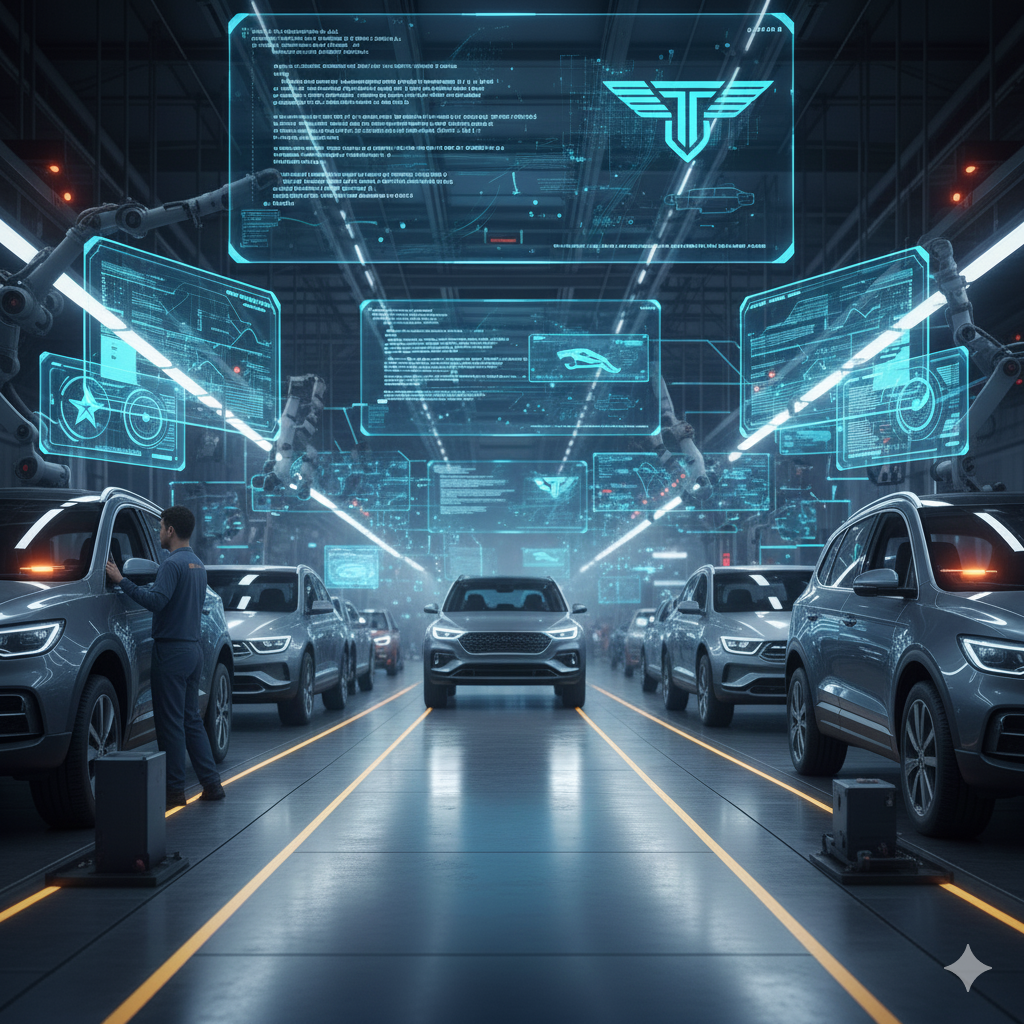
  • AI Agents in Automotive: The New Digital Workforce for U.S. OEMs and Dealers

    AI Agents in Automotive: The New Digital Workforce for U.S. OEMs and Dealers

    Why AI Agents in Automotive Are Replacing Manual Workflows Across the U.S. Automotive Industry

    The Automotive Workforce Is Going Digital

    The U.S. automotive industry is undergoing one of its most significant transformations since the introduction of automation on factory floors. While robotics and traditional automation streamlined physical processes, a new layer of intelligence is now redefining how decisions are made, workflows are executed, and customers are served. This shift is being powered by AI agents autonomous, goal-driven software systems capable of reasoning, learning, and acting across complex automotive operations.

    For U.S. OEMs, Tier-1 suppliers, dealerships, and mobility companies, AI agents represent a new digital workforce. Unlike traditional software or rule-based automation, AI agents can operate independently, collaborate with humans, and continuously optimize outcomes. As labor shortages, cost pressures, and data complexity increase, AI agents are rapidly replacing manual workflows across the automotive value chain.

    This blog explores how AI agents are transforming the U.S. automotive industry, where they deliver the most value, and why forward-looking enterprises are investing in agent-based AI architectures.

    What Are AI Agents?

    AI agents are intelligent software entities designed to perform tasks autonomously to achieve specific objectives. Powered by large language models (LLMs), machine learning, and enterprise data systems, AI agents can:

    • Interpret natural language instructions
    • Retrieve and reason over large volumes of data
    • Make decisions based on business rules and learned patterns
    • Execute actions across enterprise systems
    • Learn and improve over time through feedback

    Unlike chatbots or simple automation scripts, AI agents operate across workflows rather than isolated tasks. They can coordinate with other agents, escalate decisions to humans when required, and adapt to changing conditions—making them ideal for complex automotive environments.

    Why the U.S. Automotive Industry Is Adopting AI Agents

    The U.S. automotive sector faces a unique combination of challenges that make AI agents not just useful, but necessary:

    Rising operational costs, skilled labor shortages, increasing product complexity, connected vehicle data explosion, and heightened customer expectations are pushing organizations to rethink how work gets done.

    AI agents address these challenges by acting as intelligent digital workers that operate 24/7, scale instantly, and reduce dependency on manual intervention. For automotive enterprises managing thousands of SKUs, service requests, compliance requirements, and customer interactions, AI agents bring speed, consistency, and intelligence to operations.

    AI Agents Across the Automotive Value Chain

    AI Agents for Automotive Manufacturing

    In U.S. manufacturing plants, AI agents are transforming production intelligence. These agents continuously analyze machine data, quality metrics, and production schedules to identify inefficiencies before they become costly issues.

    AI agents support:

    • Predictive maintenance by identifying early signs of equipment failure
    • Quality control through real-time defect pattern detection
    • Production planning optimization based on demand signals
    • Root cause analysis for manufacturing anomalies

    By autonomously monitoring and responding to production conditions, AI agents reduce downtime, improve yield, and support lean manufacturing initiatives.

    Automotive AI Agents

    AI Agents for Supply Chain and Logistics

    Supply chain volatility has become a defining challenge for the U.S. automotive industry. AI agents enable proactive, data-driven supply chain management by continuously monitoring inventory levels, supplier performance, and logistics constraints.

    These agents can:

    • Forecast demand with higher accuracy
    • Recommend supplier reallocations during disruptions
    • Optimize inventory levels across locations
    • Automate procurement and replenishment workflows

    The result is a more resilient, adaptive supply chain that responds in real time to market and operational changes.

    AI Agents in Automotive Dealership Operations

    Dealerships are among the fastest adopters of AI agents in the U.S. automotive ecosystem. Manual processes in sales, inventory, financing, and customer follow-ups are increasingly being replaced by intelligent agents.

    AI agents in dealerships handle:

    • Inventory optimization and pricing recommendations
    • Lead qualification and follow-up automation
    • Financing and credit pre-check workflows
    • Sales performance insights and forecasting

    These agents help dealerships close deals faster, reduce operational overhead, and deliver a more personalized customer experience.

    AI Agents in After-Sales and Service

    After-sales service is a major revenue driver for U.S. automotive businesses. AI agents are redefining service operations by acting as intelligent service advisors.

    Service-focused AI agents can:

    • Analyze vehicle data and maintenance history
    • Recommend service actions proactively
    • Schedule service appointments automatically
    • Assist technicians with diagnostics and repair guidance

    By integrating Generative AI in Automotive systems with real-time vehicle and service data, AI agents improve first-time fix rates and customer satisfaction.

    AI Agents vs Traditional Automation

    Traditional automation relies on predefined rules and rigid workflows. While effective for repetitive tasks, it struggles with variability and complexity—both common in automotive operations.

    AI agents, in contrast, are adaptive and context-aware. They reason over data, understand intent, and dynamically choose actions. This makes them better suited for scenarios involving exceptions, judgment calls, and cross-functional coordination.

    For U.S. automotive enterprises, this shift means moving from static automation to intelligent orchestration of work.

    Architecture Behind Automotive AI Agents

    Modern automotive AI agents are typically built using a layered architecture:

    • Large Language Models for reasoning and interaction
    • Retrieval-Augmented Generation (RAG) for accessing real-time enterprise data
    • Business logic and policy engines for governance
    • Integration layers connecting ERP, DMS, PLM, CRM, and IoT systems

    This architecture ensures that AI agents remain accurate, secure, and aligned with enterprise processes—critical for regulated and safety-sensitive automotive environments.

    Security, Compliance, and Trust

    For U.S. automotive organizations, trust is non-negotiable. AI agents must operate within strict security, compliance, and data governance frameworks.

    Enterprise-grade AI agent deployments include:

    • Private or hybrid cloud environments
    • Role-based access controls
    • Audit logs and explainability layers
    • Human-in-the-loop approval mechanisms

    These measures ensure AI agents augment human teams without introducing risk.

    The Business Impact of AI Agents

    Organizations deploying AI agents across automotive operations report measurable benefits:

    • Reduced operational costs through automation of knowledge work
    • Faster decision-making and response times
    • Improved customer satisfaction and retention
    • Increased scalability without proportional headcount growth

    AI agents are no longer experimental—they are becoming a core component of digital transformation strategies across the U.S. automotive industry.

    How Hudasoft Enables AI Agents for Automotive Enterprises

    Hudasoft designs and implements enterprise-grade AI agent solutions tailored for the automotive sector. Our approach focuses on:

    • Identifying high-impact workflows for AI agent deployment
    • Designing scalable, secure AI architectures
    • Integrating agents with existing automotive systems
    • Ensuring compliance, governance, and long-term maintainability

    From OEMs and suppliers to dealerships and mobility platforms, Hudasoft helps U.S. automotive organizations build AI agents that deliver real business value.

    Conclusion: The Future of Automotive Work Is Agent-Driven

    AI agents represent the next evolution of digital transformation in the U.S. automotive industry. As complexity increases and margins tighten, enterprises that adopt AI agents as a digital workforce will gain a decisive competitive advantage.

    The question is no longer whether AI agents belong in automotive operations—but how quickly organizations can deploy them at scale.

    Partner with Hudasoft to design and deploy enterprise-grade AI agents tailored for your automotive business in the USA.