HACK LINKS - TO BUY WRITE IN TELEGRAM - @TomasAnderson777 Hacked Links Hacked Links Hacked Links Hacked Links Hacked Links Hacked Links cryptocurrency exchange vapeshop discount code vapewholesale affiliate link geek bar pulse x betorspin plataforma betorspin login na betorspin hi88 new88 789bet 777PUB Даркнет alibaba66 1xbet 1xbet plinko Tigrinho Interwin

التصنيف: Hudasoft

  • Building an MVP with a Low-Code Approach: Pros, Cons, Guide

    Building an MVP with a Low-Code Approach: Pros, Cons, Guide

    What Occurs When an Idea Remains Just an Idea?

    Picture this: You’re full of a groundbreaking solution that could change the market. You’ve recognized the demand, analyzed the competition, and determined the opportunity. But there’s an issue. Development is sluggish, expenses are piling up, and technical obstacles keep derailing your progress. Before you realize it, someone else introduces a comparable product, taking away your spotlight.

    Does this ring a bell? You’re not the only one. Numerous startups face challenges in bringing ideas to fruition. Conventional development timelines are lengthy, costly, and often fail to create the ideal product-market fit. But what if there was a quicker, more effective method to develop a Minimum Viable Product (MVP)?

    That’s where low-code MVP development comes into play.

    Why Do Startups Find It Hard to Create an MVP?

    1. Enhanced Development Costs

    Creating an MVP from the ground up with a full development team necessitates a considerable financial outlay. Employing developers, designers, and infrastructure experts can quickly deplete a startup’s funds even before the product reaches users.

    2. Protracted Development Timelines

    Even with a skilled team, traditional coding is time-consuming. From wireframing to backend development and testing, releasing a simple product can take months or even more time.

    3. Limited Technical Knowledge

    Not every startup founder possesses a technical background. Depending solely on outsourced development teams makes it challenging to iterate swiftly and react to user input.

    4. Challenges in Scaling

    An MVP should be built for growth. However, scaling a custom-developed product usually requires extensive redevelopment, resulting in increased costs and delays.

    5. Challenges in Validating the Idea

    Startups need swift validation. If a product takes too long to roll out, market conditions may change, or worse—investors could lose faith before they see any results.

    So, how are startups tackling these obstacles? By creating MVPs with low-code platforms.

    Why Low-Code is Transforming MVP Development

    1. Speed: Accelerate Your Market Entry

    With traditional development, an MVP can take several months to complete. With low-code, you can accomplish it in weeks or even days. Less time spent coding means more time available for testing and refining based on actual user feedback.

    2. Reduced Costs, Enhanced Efficiency

    Hiring an entire development team is costly. Low-code platforms greatly lower expenses by decreasing needing multiple developers, infrastructure, and troubleshooting. You spend less and still achieve a functional product.

    3. Simple Iteration: Test, Optimize, Repeat

    MVPs are all about swift learning. Low-code platforms enable you to adjust features, refine UI, and enhance workflows without starting over.

    4. Non-Technical Founders Can Develop Too

    Not a programmer? No issue. Low-code platforms enable entrepreneurs, marketers, and product managers to create and launch MVPs without writing complicated code.

    How Startups Are Using Low-Code to Build MVPs Quicker

    Case Study 1: The Fintech Startup That Halved Development Time

    A fintech startup required to build a lending platform but didn’t have the funds for a complete engineering team. Instead of spending six months coding a backend from the ground up, they developed a working prototype using a low-code MVP development platform.

    Using pre-existing APIs and integrations, they launched in just three months, attracted early adopters, and secured funding to expand their product.

    Case Study 2: The Retail Business That Created an MVP Without Developers

    A retail entrepreneur aimed to build an eCommerce marketplace but lacked coding knowledge. Employing developers was too costly, and conventional development would take too long.

    By using a no-code MVP for businesses, they constructed a fully operational app featuring payment processing and inventory management in just eight weeks all without writing a single line of code.

    Case Study 3: The SaaS Startup That Scaled Without Rebuilding

    A SaaS company needed swift validation for their idea. They launched with a low-code platform that allowed them to prototype, evaluate, and refine based on customer insights.

    By the time they reached 10,000 users, they effortlessly scaled their MVP using low-code tools that assisted advanced features like AI automation and analytics.

    When Is It Appropriate to Use Low-Code for Your MVP?

    • You need to validate an idea rapidly prior to investing in comprehensive development.
    • You have restricted technical resources but need to build a functional product.
    • You’re piloting a Proof of Concept (PoC) for potential investors or stakeholders.
    • You wish to start a SaaS, marketplace, or workflow automation product without extensive coding.

    Top Low-Code Platforms for MVP Development

    If you’re considering low-code, here are some leading platforms to investigate:

    • Bubble – Excellent for web applications featuring drag-and-drop construction.
    • OutSystems – Enterprise-level low-code development.
    • Mendix – Perfect for workflow automation and business applications.
    • Adalo – Ideal for mobile app MVPs.
    • Glide – Best for straightforward apps built from Google Sheets.

    Potential Drawbacks (And How to Address Them)

    1. Customization Limitations

    Some platforms may not accommodate detailed features. Solution? Start with low-code, then transition to full-code when needed.

    2. Concerns About Scalability

    Certain applications might encounter performance limitations. Solution? Choose a scalable platform or plan for migration in advance.

    3. Dependence on Vendors

    You rely on a single platform. Solution? Select a platform that permits easy export or API integrations.

    How to Create an MVP Using Low-Code: A Step-by-Step Manual

    Step 1: Identify Your Core Features

    Begin with the most critical functionalities that address your customer’s needs. Keep it optimized—additional features can be added later.

    Step 2: Select the Appropriate Low-Code Platform

    Search for low-code platforms personalized for startups that fulfill your requirements.

    Step 3: Use Pre-Made Components

    Accelerate development by maximizing swift MVP development tools, such as drag-and-drop UI builders, ready-to-use authentication modules, and built-in analytics.

    Step 4: Acquire Early User Feedback

    Launch promptly, test with a small user group, and use feedback to enhance your product.

    Step 5: Scale as Necessary

    Once your MVP gains momentum, assess whether to continue with low-code or shift to full-code development for long-term growth.

    Final Thoughts: Is Low-Code the Suitable Option for Your MVP?

    If you require speed, cost-effectiveness, and adaptability, then low-code development for startups is a fantastic option. Whether you’re launching a SaaS product, fintech application, or eCommerce marketplace, low-code lets you build, test, and iterate without getting mired in prolonged development cycles.

    For startups aiming to validate their idea and gain early traction, low-code MVPs are revolutionary. The inquiry isn’t whether to use low-code it’s how quickly you want to launch.


  • Did You Know These 5 Successful Startups Started with Just an MVP?

    Did You Know These 5 Successful Startups Started with Just an MVP?

    Have you ever wondered how some of the biggest startups in the world started? Did they launch with a perfect, feature-packed product? Nope. They began with something much simpler a Minimum Viable Product (MVP).

    The truth is, many of today’s tech giants started with just a bare-bones version of their final product. They didn’t waste time building unnecessary features or waiting for perfection. Instead, they put their ideas to the test, gathered real-world feedback, and scaled smartly.

    If you’re thinking about launching your own startup, understanding these MVP startup examples could be the game-changer you need. Let’s dive into five famous startups that started with MVP and uncover how they transformed from humble beginnings into industry leaders.

    1. Airbnb – From Air Mattresses to a Billion-Dollar Empire

    The MVP:

    Two broke founders, Brian Chesky and Joe Gebbia, had an idea why not rent out air mattresses in their apartment to make extra cash? They quickly built a basic website, snapped some photos of their apartment, and listed it for rent.

    Key Learnings:

    • People were willing to pay for short-term rentals in personal spaces.
    • Direct interaction with early users helped them refine the user experience.

    The Breakthrough Moment:

    They knew they had something when conference attendees in San Francisco booked their air mattresses because hotels were full. This real-world validation gave them confidence to push forward.

    Scaling Up:

    With initial traction, they started building an actual platform, adding booking systems, payments, and host verification. Today, Airbnb is valued at over $75 billion all thanks to testing a simple idea first.

    2. Dropbox – An MVP That Was Just a Video

    The MVP:

    Before writing a single line of complex code, Dropbox’s founder Drew Houston created a simple explainer video demonstrating how the file-sharing tool would work. The product didn’t even exist yet.

    Key Learnings:

    • The video went viral and increased their waitlist from 5,000 to 75,000 users overnight.
    • This proved demand existed before heavy investment.

    The Breakthrough Moment:

    Imagine getting thousands of sign-ups for a product that hasn’t even been built yet. That’s exactly what happened. The video’s success gave them the confidence to start full-scale development.

    Scaling Up:

    After validating the idea, Dropbox focused on seamless user experience and referral incentives, growing into one of the most successful cloud storage companies worldwide.

    3. Facebook – A College Networking MVP

    The MVP:

    Mark Zuckerberg initially built The Facebook as a small social networking platform exclusive to Harvard students.

    Key Learnings:

    • Exclusivity created demand students from other universities wanted access.
    • Simplicity worked early users loved the basic friend and profile features.

    The Breakthrough Moment:

    When students from other universities began demanding access, Zuckerberg knew he had something huge. Facebook quickly expanded beyond Harvard and into colleges nationwide.

    Scaling Up:

    Facebook expanded university by university, then to the public. Today, it has over 3 billion users and is a social media powerhouse. The MVP approach helped it gain traction without overwhelming users with too many features too soon.

    4. Uber – A Simple App for Black Car Rides

    The MVP:

    Uber’s first version, UberCab, was launched in San Francisco and only allowed users to book luxury black cars via a simple app.

    Key Learnings:

    • People were willing to pay a premium for convenience.
    • Scaling required more drivers and affordable pricing models.

    The Breakthrough Moment:

    When the app gained popularity among professionals and executives who valued convenience, Uber realized the potential to disrupt the entire taxi industry.

    Scaling Up:

    Once demand was validated, Uber expanded into ride-sharing with everyday cars, introduced UberX, and eventually became a global transportation leader, valued at $90+ billion.

    5. Zappos – Selling Shoes Without Inventory

    The MVP:

    Before building a massive e-commerce business, founder Nick Swinmurn took pictures of shoes at local stores and listed them online. When someone ordered, he’d buy the shoes and ship them himself.

    Key Learnings:

    • Proved people were willing to buy shoes online.
    • Avoided the risk of holding massive inventory before knowing if the idea worked.

    The Breakthrough Moment:

    Sales started rolling in, proving that customers were willing to trust an online store for something as personal as shoes.

    Scaling Up:

    After validating demand, Zappos built a full-scale e-commerce platform, focusing on customer service, and was later acquired by Amazon for $1.2 billion.

    What Can You Learn From These MVP Startup Success Stories?

    These MVP case studies prove one key thing: You don’t need to build a perfect product to launch. Instead, follow these steps:

    Start Small – Focus on solving a real problem with minimal features.
    Test & Learn – Gather feedback from early users.
    Pivot if Necessary – Improve or change direction based on data.
    Scale Gradually – Once demand is proven, expand features and reach.

    Bonus Tip: Don’t Fall in Love With Your First Idea

    Every successful startup mentioned here adapted their product based on real-world feedback. Airbnb didn’t start with a global network of hosts it started with one apartment. Dropbox didn’t launch a polished app it started with a simple video.

    Ready to Build Your Own MVP?

    If you have a startup idea, take inspiration from these lean startup MVP examples. Start with a basic version, validate demand, and grow smartly. Who knows? Your startup might be the next big MVP success story.

    Which of these MVP startup examples inspired you the most? Share your thoughts in the comments!

  • How Can Real Estate Benefit from an ERP Solution?

    How Can Real Estate Benefit from an ERP Solution?

    Have you ever felt like managing real estate is like juggling too many balls at once property listings, tenant details, lease agreements, financials, maintenance schedules, and compliance regulations? One missed step, and boom! A late rent payment, a miscalculated budget, or an unhappy client throws everything off balance.

    What if there was a way to simplify this chaos, streamline operations, and boost profitability all in one place? Enter Real Estate ERP Software, the game changer for property managers, real estate developers, and investors.

    Why Traditional Real Estate Management is Broken

    Let’s be real. Traditional property management relies on multiple disconnected systems, endless spreadsheets, and manual processes. The result? Data scattered across different platforms, human errors, miscommunication, and unnecessary delays.

    Picture this: You’re trying to track multiple lease agreements, but the latest contract is buried in an email thread. Or, your finance team struggles to generate real-time reports because your accounting data isn’t synced with property management software. Sounds familiar? That’s why the real estate industry needs ERP software.

    How ERP Transforms Real Estate Management

    1. Centralized Data Management

    Switching between multiple tools and platforms can lead to delays and confusion. An ERP system for real estate consolidates everything sales, leasing, finance, project management, and customer relations into a single, integrated platform. This allows instant access to real-time data, improving efficiency and decision-making.

    2. Smarter Property & Lease Management

    Manually tracking lease renewals, rental payments, maintenance requests, and compliance deadlines is both time-consuming and error-prone. Property management ERP software automates these tasks, sending reminders, tracking payments, and ensuring smooth operations.

    3. Simplified Real Estate Accounting

    Managing financials in real estate can be complex. Real estate accounting software automates invoicing, tax calculations, and regulatory compliance, ensuring accuracy. With real-time financial reports, businesses can maintain a clear overview of cash flow and profitability.

    4. Improved Sales & Customer Relationship Management (CRM)

    An ERP integrated with real estate CRM enhances lead tracking, automates follow-ups, and personalizes customer interactions. Whether dealing with property sales or rentals, ERP systems help close deals faster and improve client relationships.

    5. Advanced Analytics & Reporting

    Making decisions based on outdated reports or intuition is risky. Cloud ERP for real estate management offers real-time dashboards, sales forecasts, and performance analytics, empowering businesses with data-driven insights.

    6. Efficient Project & Construction Management

    For real estate developers, managing multiple projects, budgets, and deadlines is a challenge. ERP for real estate project management tracks resource allocation, contractor payments, and project timelines, minimizing budget overruns and delays.

    7. Automated Lease & Rental Management

    Manual lease tracking is inefficient and prone to errors. Automated lease management with ERP sends alerts for contract renewals, rent payments, and compliance deadlines, reducing risks and improving operational efficiency.

    8. Regulatory Compliance & Risk Management

    Real estate businesses must adhere to various local and international regulations. An ERP solution helps ensure compliance with tax laws, financial regulations, and lease agreements by automating documentation and record-keeping.

    9. Scalability for Business Growth

    As real estate companies expand, managing multiple properties and clients can become overwhelming. A robust ERP system for real estate provides scalability, allowing businesses to manage increased workloads efficiently without adding unnecessary complexity.

    10. Enhanced Tenant and Customer Experience

    Tenants and property buyers expect seamless communication and service. An ERP system enables online rent payments, automated reminders, self-service portals, and better issue resolution, improving tenant satisfaction and retention.

    11. Workforce & Vendor Management

    Real estate businesses often work with multiple contractors, agents, and service providers. An ERP system helps manage vendor contracts, payroll, and HR processes efficiently, ensuring smooth operations.

    12. Document Management & Security

    Handling real estate documents manually increases risks of misplacement and security breaches. An ERP provides a secure digital repository for lease agreements, financial documents, and legal papers, ensuring easy access and protection from unauthorized access.

    Choosing the Right ERP for Real Estate

    With numerous ERP options available, selecting the best solution requires careful evaluation. Here are key features to consider:

    • Cloud-based access for flexibility and remote management
    • Integration with CRM & accounting tools for seamless data flow
    • Customizable modules to fit business-specific needs
    • User-friendly interface to ensure easy adoption
    • Scalability to accommodate business growth
    • Strong security protocols to protect sensitive data

    Final Thoughts: Is an ERP Worth the Investment?

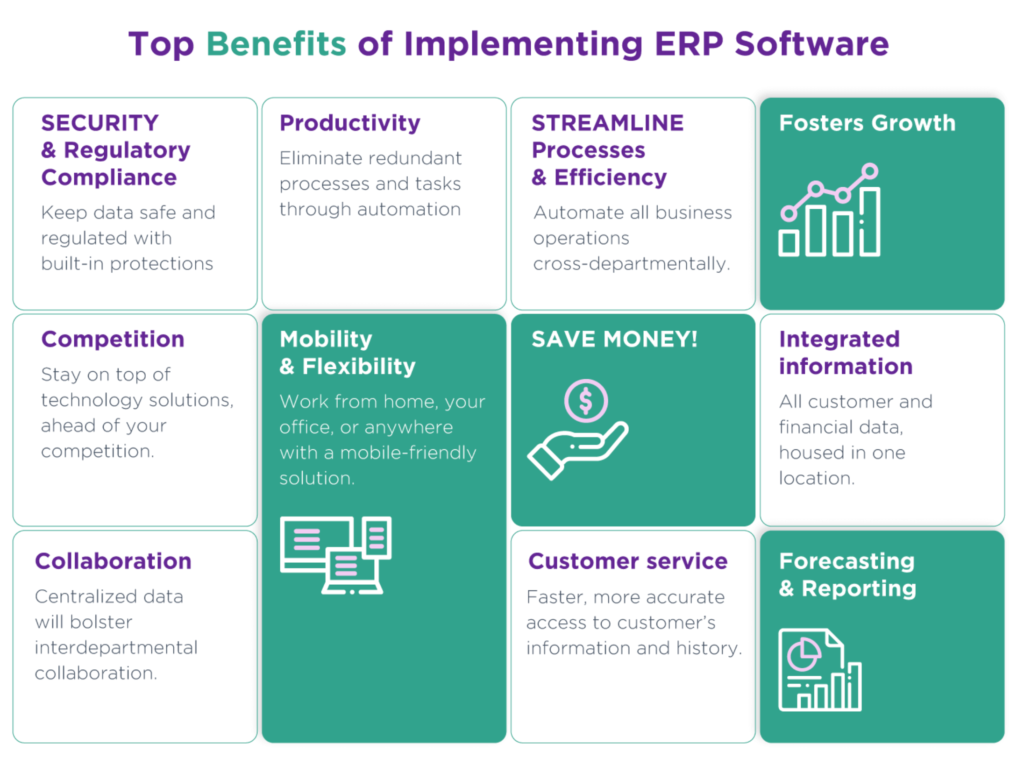
    Implementing an ERP system is not just a technological upgrade; it is a strategic move for real estate business automation. Whether managing property sales, rentals, or large-scale development projects, an ERP solution significantly enhances efficiency, reduces operational burdens, and improves overall business performance.

    For real estate professionals looking to optimize operations and drive growth, an ERP system is not just an option it is a necessity. The key question is: Is your business ready to transition from complexity to clarity with an ERP solution?

  • Why ERP Implementation Fails, and How Consultants Prevent It

    Why ERP Implementation Fails, and How Consultants Prevent It

    Why Do Most ERP Implementations Fail?

    Ever wondered why so many companies invest heavily in an ERP system only to end up with frustration, lost revenue, and operational chaos? Despite ERP being a game-changer, over 50% of ERP implementations fail or do not meet expectations.

    Is it the software? The vendor? Or is it an internal failure? The truth is, ERP failures are rarely about the technology itself. The real culprits? Poor planning, resistance to change, and bad execution.

    In this blog, we’ll break down the common ERP implementation challenges and explore how expert ERP consultants step in to prevent disasters before they happen.

    Top Reasons Why ERP Projects Fail

    1. Lack of Clear Objectives & Poor Planning

    Many companies dive into ERP without a proper roadmap. They fail to define goals, underestimate complexity, and set unrealistic timelines.

    Solution: ERP consultants conduct a thorough business analysis, set measurable objectives, and create a phased implementation strategy.

    2. Resistance to Change & Poor User Adoption

    Employees often resist new workflows, fearing job disruptions. Without proper training and buy-in, even the best ERP software will fail.

    Solution: Change management is key. Consultants facilitate training, ensure smooth transitions, and encourage user adoption.

    3. Excessive Customization & Complexity

    Many businesses try to bend ERP to fit outdated processes instead of optimizing workflows. Over-customization leads to costly upgrades and maintenance nightmares.

    Solution: Consultants recommend minimal customization, leveraging standard ERP features to ensure scalability and flexibility.

    4. Data Migration Challenges

    Messy, outdated, or incomplete data can ruin an ERP implementation. Many businesses struggle with data migration, cleansing, and validation.

    Solution: Consultants establish a robust data strategy, ensuring clean and structured data migration while minimizing errors.

    5. Integration Nightmares

    ERP systems often need to integrate with CRM, accounting, and third-party software. Poor integration leads to data silos, duplicate entries, and inefficiencies.

    Solution: Consultants implement seamless integrations using APIs and middleware to ensure data consistency across all systems.

    6. Underestimating Costs & Timelines

    Companies frequently miscalculate budgets and timelines, leading to financial strain and frustration when ERP implementations drag on.

    Solution: Consultants provide realistic cost estimates, phased rollouts, and risk management strategies to prevent overruns.

    7. Wrong Vendor or Lack of Post-Implementation Support

    Choosing the wrong ERP vendor or lacking post-go-live support can lead to operational downtime and unresolved system issues.

    Solution: Consultants help businesses select the right ERP vendor, negotiate service-level agreements (SLAs), and ensure ongoing support and optimization.

    Additional Challenges in ERP Implementation

    8. Poor Communication Between Stakeholders

    Lack of clear communication between the company, implementation team, and end-users often results in confusion, unrealistic expectations, and misalignment.

    Solution: Consultants bridge communication gaps by aligning stakeholders, defining responsibilities, and ensuring regular check-ins.

    9. Failure to Conduct Thorough Testing

    Skipping proper testing before go-live can lead to system errors, workflow disruptions, and costly fixes post-deployment.

    Solution: ERP consultants implement rigorous testing strategies, including user acceptance testing (UAT), to ensure system readiness before launch.

    10. Inadequate Training and Knowledge Transfer

    Without proper training, employees struggle to utilize the ERP system efficiently, reducing overall ROI.

    Solution: Consultants develop comprehensive training programs to equip employees with the skills needed for a successful transition.

    How Consultants Prevent ERP Failure: The Expert Advantage

    Hiring an ERP consultant isn’t an expense; it’s an investment in success. Here’s how they ensure a smooth implementation:

    • Strategic Planning & Roadmap – Aligning ERP goals with business objectives.
    • Process Optimization – Helping businesses refine workflows instead of over-customizing.
    • Change Management & Training – Driving user adoption with structured training programs.
    • Data Strategy & Quality Assurance – Ensuring accurate data migration and system integrity.
    • Seamless Integration – Connecting ERP with existing tools to prevent disruptions.
    • Budget & Timeline Management – Providing realistic planning to prevent overruns.
    • Post-Go-Live Support – Ensuring continuous improvement and issue resolution.
    • Regular System Audits – Monitoring ERP performance and suggesting improvements over time.
    • Custom Reports & Dashboards – Providing real-time insights to optimize business decisions.

    Best Practices for a Successful ERP Implementation

    1. Define Clear Goals & Objectives

    Companies should outline clear, measurable goals for ERP adoption to align expectations across all teams.

    2. Choose the Right ERP System & Vendor

    Selecting an ERP that fits your industry needs and integrates well with existing infrastructure is crucial.

    3. Invest in Change Management

    ERP transformation requires buy-in from employees. Regular communication and hands-on training improve adoption rates.

    4. Take a Phased Implementation Approach

    A step-by-step ERP rollout minimizes risks and helps teams adjust to the new system gradually.

    5. Ensure Continuous Support & Monitoring

    ERP success doesn’t end at go-live. Ongoing maintenance, upgrades, and optimizations ensure long-term value.

    Final Thoughts: Avoid ERP Disaster Before It Starts

    ERP implementation isn’t just about installing software; it’s about transforming business processes. Companies that fail to plan, train, and manage change are bound to face ERP system failures. However, with the right ERP consultants, businesses can mitigate risks, avoid costly mistakes, and ensure a seamless transition.

    Are you planning an ERP implementation? Don’t risk failure. Get expert guidance from ERP consultants to guarantee success.

  • What is ERP Integration and How ERP Transforms Business Operations and Data Flow

    What is ERP Integration and How ERP Transforms Business Operations and Data Flow

    Enterprise Resource Planning (ERP) systems have become the backbone of modern organizations, providing real-time insights, automating processes, and enhancing productivity. However, a standalone ERP system is often not enough. Businesses require integration with various applications, including CRM, eCommerce platforms, supply chain management, and financial systems, to maximize their operational efficiency. This is where an ERP Integration Expert plays a crucial role.

    Enterprise Resource Planning (ERP) systems consolidate core business functions, but without proper integration, organizations may face data silos, inefficiencies, and limited scalability.

    Successful ERP integration enables seamless communication between departments, ensuring real-time data accessibility across finance, supply chain, HR, and customer relationship management (CRM). By working with an ERP Integration Expert, companies can unlock the full potential of their ERP system and drive operational excellence.

    Understanding ERP Integration

    What is ERP Integration?

    ERP integration is the process of connecting an ERP system with other software applications within an organization to ensure smooth data exchange and automation. It eliminates data silos, improves accuracy, and enhances operational efficiency by allowing different departments to work on a unified platform.

    Importance of ERP Integration

    1. Centralized Data Management: Integration allows real-time data sharing across multiple systems, improving collaboration and decision-making.
    2. Enhanced Productivity: Automating workflows reduces manual data entry, minimizes errors, and speeds up processes.
    3. Better Customer Experience: A well-integrated system ensures a seamless experience across various touchpoints, such as CRM and eCommerce platforms.
    4. Improved Compliance and Reporting: A centralized ERP ensures that all financial and operational data is consistent, helping businesses meet compliance requirements.
    5. Scalability: As businesses grow, integrated ERP systems can easily adapt to new requirements without disrupting operations.

    Key Benefits of ERP Integration

    ERP integration is a game-changer for businesses looking to optimize operations and improve efficiency. By connecting various software applications, organizations can streamline processes and eliminate inefficiencies.

    • Eliminates Data Silos – Integrated systems facilitate smooth data exchange between departments, preventing redundant or outdated information.
    • Increases Productivity – Automation of manual tasks frees employees to focus on strategic operations.
    • Improves Decision-Making – Real-time analytics enable businesses to make informed choices quickly.
    • Enhances Customer Experience – Integrated CRM and ERP systems help deliver personalized customer interactions.
    • Scalability and Flexibility – Businesses can expand operations without experiencing system inefficiencies.

    Key ERP Integration Approaches

    Choosing the right ERP integration approach is essential for ensuring smooth operations and data consistency. Here are some of the most effective integration methods:

    • Point-to-Point Integration
      • Directly connects individual applications with the ERP system.
      • Suitable for small-scale businesses but becomes complex as the number of integrations increases.
    • Enterprise Service Bus (ESB)
      • Acts as a middleware that allows multiple applications to communicate.
      • Provides flexibility and scalability for large organizations.
    • API-Based Integration
      • Uses APIs (Application Programming Interfaces) to connect ERP with other software applications.
      • Ensures real-time data synchronization and is ideal for cloud-based solutions.
    • iPaaS (Integration Platform as a Service)
      • A cloud-based approach that connects various applications with minimal coding.
      • Best for businesses looking for scalability and rapid deployment.

    The Role of ERP in Business Operations

    An ERP system centralizes data from various departments—finance, HR, supply chain, sales, and customer service—into a unified platform. This integration ensures that every function operates with accurate, up-to-date information. Some key transformations include:

    1. Automated Workflows

    ERP eliminates manual data entry and repetitive tasks, reducing errors and saving time. Automated processes enhance productivity by enabling faster approvals, order processing, and reporting.

    2. Improved Data Accuracy

    With ERP integration, data is updated in real time, preventing inconsistencies between different departments. This ensures better forecasting, reporting, and compliance.

    3. Enhanced Collaboration

    ERP fosters interdepartmental collaboration by providing a shared data source. Teams can make informed decisions based on unified insights rather than relying on fragmented information.

    4. Optimized Resource Management

    Businesses can track inventory, financials, and human resources more effectively. This prevents overstocking, underutilization of assets, and financial discrepancies.

    5. Scalability and Flexibility

    Modern ERP systems are cloud-based and scalable, allowing businesses to adapt to growth without operational disruptions. ERP integration also enables seamless connectivity with third-party applications, enhancing system capabilities.

    How ERP Enhances Data Flow

    Data flow within an organization is crucial for operational efficiency. An ERP system optimizes data movement in the following ways:

    • Centralized Database: All business functions access a single data repository, ensuring consistency.
    • Real-Time Analytics: Live data tracking enables better decision-making and quick response to market changes.
    • Secure Access Controls: ERP allows role-based access, ensuring data security while maintaining workflow efficiency.

    ERP Integration with Popular Business Applications

    Integrating ERP with other business applications ensures smooth operations and better efficiency. Here are key areas where ERP integration makes an impact:

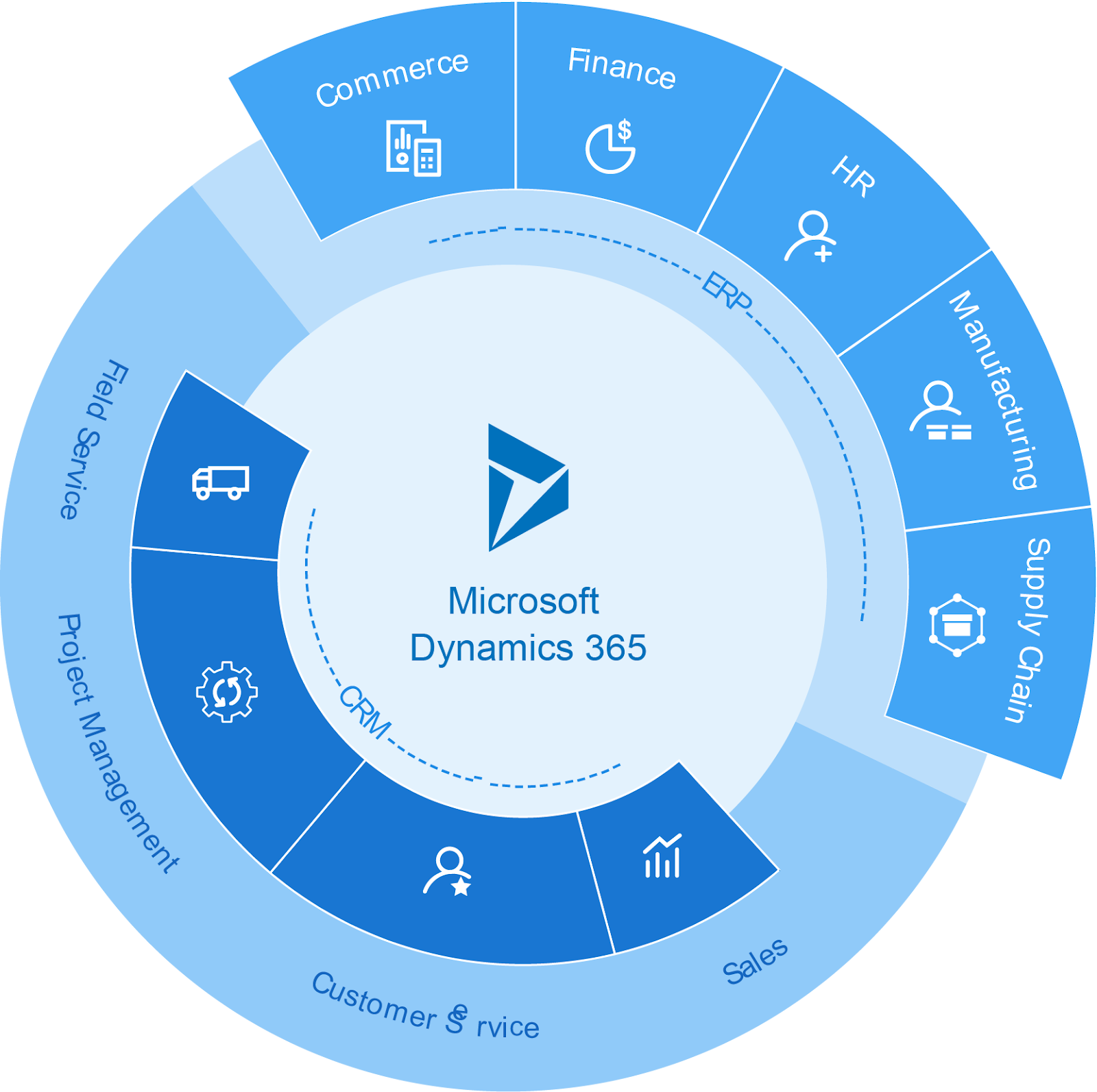
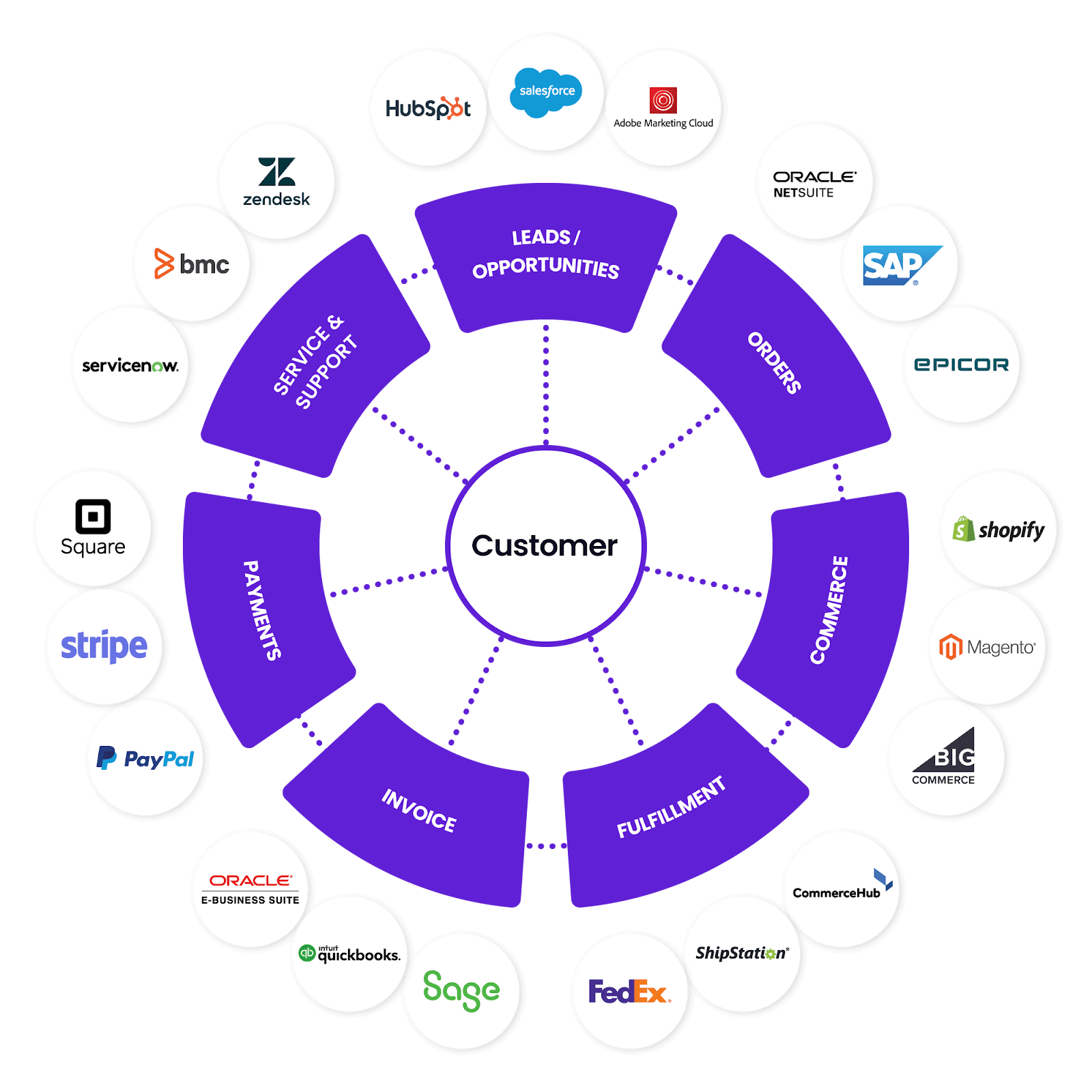
    1. CRM Integration (Microsoft Dynamics 365, Salesforce, HubSpot)
      • Helps in aligning sales, marketing, and customer service teams.
      • Provides a 360-degree view of customer interactions.
    1. eCommerce Integration (Shopify, Magento, WooCommerce)
      • Automates order processing, inventory management, and pricing updates.
      • Enhances customer experience through real-time tracking and personalized offers.
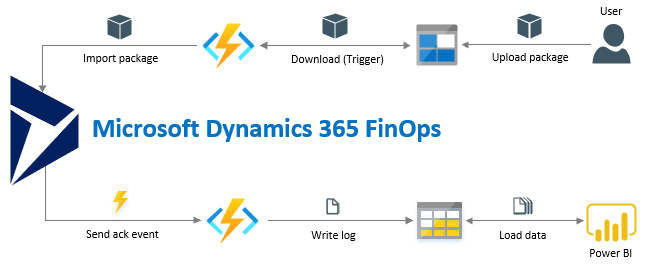
    1. Financial System Integration (Microsoft Dynamics FinOps, QuickBooks, NetSuite)
      • Streamlines financial reporting, budgeting, and forecasting.
      • Ensures accurate financial compliance and audit readiness.
    1. Supply Chain and Logistics Integration
      • Improves inventory visibility, order fulfillment, and supplier coordination.
      • Reduces costs and enhances efficiency through automated tracking.
    2. HRMS Integration (Workday, SAP SuccessFactors)
      • Synchronizes payroll, attendance, and performance management.
      • Ensures smooth workforce management and employee engagement.

    Challenges in ERP Integration and How to Overcome Them

    Despite its benefits, ERP integration comes with challenges that businesses need to address. Here’s how you can tackle them effectively:

    1. Data Silos and Inconsistencies
      • Challenge: Different systems may use varied data formats, causing inconsistencies.
      • Solution: Standardizing data formats and implementing real-time synchronization can help maintain consistency across systems.
    2. High Implementation Costs
      • Challenge: Complex integrations can be costly.
      • Solution: Adopting cost-effective solutions like API-based and iPaaS integrations can help reduce expenses without compromising efficiency.
    3. Security Risks
      • Challenge: Integrations can expose sensitive business data to security vulnerabilities.
      • Solution: Implementing secure authentication methods, data encryption, and compliance with global security standards is crucial for data protection.
    4. Downtime and Disruptions
      • Challenge: Integrating a new system can cause temporary disruptions.
      • Solution: A phased deployment strategy and thorough testing before going live can help ensure a smooth transition with minimal disruptions.

    How Hudasoft’s ERP Consulting Services Help Businesses

    At Hudasoft, we take a strategic approach to ERP integration, ensuring smooth implementation with minimal disruptions. Our ERP Consulting Services include:

    • Needs Assessment & Strategy Planning: Understanding business requirements and defining an optimal integration approach.
    • Custom Integration Development: Building tailored integrations using APIs, middleware, and automation tools.
    • Data Migration & Synchronization: Ensuring seamless transfer of existing data into the integrated ERP system.
    • Ongoing Maintenance & Support: Providing continuous monitoring, troubleshooting, and updates to enhance system performance.

    Future of ERP Integration

    With advancements in AI, machine learning, and IoT, the future of ERP integration is more intelligent and automated. Businesses that invest in seamless ERP integration will have a competitive edge by improving decision-making, reducing costs, and enhancing customer experiences.

    Conclusion

    ERP integration is no longer an option but a necessity for businesses aiming to enhance efficiency and stay competitive. Partnering with an ERP Integration Expert ensures seamless connectivity between your ERP and other business applications, leading to increased productivity, data accuracy, and operational excellence.

    Hudasoft’s ERP Consulting Services offer tailored solutions for integrating Microsoft Dynamics 365, FinOps, Odoo, NetSuite, and more. Whether you need point-to-point integration, API-based connections, or advanced iPaaS solutions, our experts can help you achieve a fully connected digital ecosystem.

    Looking to integrate your ERP system for better efficiency? Contact Hudasoft today and let’s build a smarter, more connected future for your business!

  • Top ERP Integration Challenges and How to Overcome Them

    Top ERP Integration Challenges and How to Overcome Them

    Have you ever faced issues while integrating your ERP system with other business applications? Does it feel like your ERP isn’t communicating well with your CRM, HRM, or supply chain software? You’re not alone! ERP integration challenges are common, but the good news is that they can be solved with the right strategies.

    ERP systems are designed to streamline operations, but without proper integration, they can lead to data silos, inefficiencies, and even compliance risks. In this blog, we’ll break down the most common ERP integration issues, explore how to fix ERP integration issues, and share best practices for ERP integration to ensure a smooth and successful implementation.

    Common ERP Integration Challenges and Their Solutions

    1. Data Silos & Inconsistent Data Formats

    Ever found yourself dealing with duplicate or missing data across systems? This happens when different software solutions don’t communicate properly, leading to ERP system integration problems.

    Solution:

    • Use ERP middleware integration solutions to enable seamless data exchange.
    • Opt for API-based ERP integration for a more flexible and scalable connection.
    • Cleanse and standardize data before migration to avoid discrepancies.

    2. ERP System Compatibility Issues

    Struggling to make your ERP work with your CRM or eCommerce platform? ERP system compatibility issues often arise when businesses use multiple software solutions that weren’t designed to work together.

    Solution:

    • Choose an ERP with pre-built connectors for popular business applications.
    • Utilize ERP cloud integration tools to bridge the gap between on-premise and cloud-based systems.
    • Test integrations thoroughly in a controlled environment before going live.

    3. Customization & Scalability Issues

    While every business is unique, excessive ERP customization can lead to long-term maintenance headaches and limit scalability.

    Solution:

    • Use low-code/no-code ERP integration tools for easier customization.
    • Opt for modular ERP solutions that allow for incremental changes.
    • Focus on configurations rather than complex custom coding.

    4. Security & Compliance Risks

    ERP systems handle sensitive data, making them a prime target for cyber threats. Poor security measures can lead to data breaches and regulatory compliance violations.

    Solution:

    • Implement role-based access controls (RBAC) to manage permissions.
    • Ensure compliance with GDPR, HIPAA, or other relevant regulations.
    • Encrypt sensitive data and use secure APIs for integration.

    5. Managing ERP Integration Costs & Risks

    Worried about hidden costs and unforeseen risks? Many businesses underestimate the effort required for ERP integration, leading to budget overruns and delays.

    Solution:

    • Adopt a phased integration approach to minimize disruptions.
    • Work with experienced ERP consultants to avoid unnecessary expenses.
    • Leverage cost-effective ERP cloud solutions to reduce infrastructure costs.

    6. User Adoption & Change Management

    Resistance to new technology is one of the biggest hurdles in ERP software integration. Employees may struggle to adapt to new workflows, causing inefficiencies.

    Solution:

    • Provide comprehensive training and support to employees.
    • Implement a change management strategy to ease the transition.
    • Continuously gather feedback and refine the system as needed.

    7. Real-Time Data Synchronization Challenges

    Outdated or unsynchronized data can create ERP integration troubleshooting issues, leading to inaccurate reporting and decision-making.

    Solution:

    • Use event-driven architecture to enable real-time updates.
    • Implement iPaaS (Integration Platform as a Service) for seamless data exchange.
    • Monitor integrations with real-time dashboards and automated alerts.
    ERP Integration Challenges

    Best Practices for ERP Integration Success

    Want to know how to integrate ERP successfully? Here are some proven strategies:

    • Define clear integration goals before starting the project.
    • Choose the right ERP integration tools that align with your business needs.
    • Test rigorously to identify potential ERP integration troubleshooting issues.
    • Avoid common mistakes in ERP integration by following industry best practices.
    • Optimize ERP software integration continuously to improve performance.

    Conclusion

    Integrating an ERP system with other business applications is no easy task, but with the right approach, it can be done efficiently. Whether you’re facing ERP data migration challenges, ERP system compatibility issues, or security concerns, a structured integration strategy will help you overcome these obstacles.

    By following these successful ERP integration strategies, businesses can avoid ERP implementation failures, enhance efficiency, and future-proof their operations. Looking for the best solutions for ERP integration problems? Investing in expert guidance and robust integration tools can make all the difference.

    Need help with ERP integration? Contact us today to explore ERP software integration solutions that fit your business needs!

  • 2025 ERP Trends and Predictions: What to Expect in the Future of ERP Software

    2025 ERP Trends and Predictions: What to Expect in the Future of ERP Software

    The world of ERP (Enterprise Resource Planning) is evolving at lightning speed. Are businesses ready for what’s coming? Or will outdated systems hold them back? As we step into 2025, it’s clear that ERP is no longer just about managing business processes it’s about driving growth, agility, and resilience. In this blog, we’ll break down the game-changing ERP trends for 2025 and what businesses need to do to stay ahead. Buckle up!

    1. AI & Automation: The Smart ERP Revolution

    Let’s be real, manual processes are a thing of the past. AI in ERP systems is now the driving force behind automation, predictive analytics, and smarter decision-making. Imagine an ERP system that forecasts inventory needs before you even realize you’re running low or automates invoices without human intervention. Sounds futuristic? It’s happening right now! In 2025, AI-powered chatbots, automated workflows, and intelligent forecasting will redefine how businesses operate. Are you leveraging AI yet, or are you still stuck in the slow lane?

    2. Cloud ERP Continues to Dominate

    Still debating whether to move to the cloud? In 2025, you might not have a choice. The shift to cloud ERP is accelerating, and businesses that stick with outdated on-premise systems risk falling behind. Why? Because cloud ERP offers scalability, real-time access, and cost savings that traditional systems just can’t match. Imagine running your business from anywhere, anytime, with all data at your fingertips. Can your current ERP do that?

    3. Composable ERP: The New Standard

    Ever felt stuck with an ERP that doesn’t quite fit your business needs? Say hello to Composable ERP solutions where you pick and choose the modules that work best for you. No more clunky, one-size-fits-all software! The flexibility of composable ERP means businesses can adapt on the fly, making them more resilient to market changes. Are you ready to build an ERP that actually works for you?

    4. Low-Code/No-Code Development in ERP

    Want to tweak your ERP without hiring a team of developers? Low-code ERP development is making customization faster and easier than ever. With drag-and-drop functionality and minimal coding required, businesses can modify workflows, build custom dashboards, and automate processes in no time. So, what’s stopping you from making your ERP system truly your own?

    5. Industry-Specific ERP Solutions

    Let’s face it one ERP doesn’t fit all. In 2025, industry-specific ERP solutions will take center stage, offering tailored features for manufacturing, eCommerce, logistics, and more. Pre-built compliance tools? Check. Specialized reporting? Done. Faster implementation? Absolutely. Why settle for a generic ERP when you can have one designed for your industry?

    6. Blockchain for Security & Transparency

    Cybersecurity threats are growing how secure is your ERP? Blockchain in ERP is stepping in to revolutionize data security, prevent fraud, and ensure transparency, especially in supply chain management. Imagine having an unalterable record of every transaction no more disputes, no more fraud. But here’s where it gets even more interesting FinOps (Financial Operations) is leveraging blockchain to enhance cost visibility, track spending in real-time, and optimize financial decision-making. Could 2025 be the year where blockchain not only secures ERP systems but also transforms financial operations?

    7. IoT-Integrated ERP for Real-Time Operations

    Picture this: Your ERP system alerts you before a machine breaks down, tracks inventory in real time, and optimizes supply chains without human input. Sounds like magic? It’s just IoT integration in ERP. In 2025, businesses that connect their ERP with IoT devices will gain real-time operational visibility and prevent costly downtime. Can your ERP do that?

    8. Data-Driven Decision Making with Embedded Analytics

    “Gut feeling” decisions are out data-driven decisions are in. AI-powered ERP analytics are making it easier than ever to spot trends, optimize operations, and improve forecasting. With predictive analytics in ERP, businesses will have insights before problems even arise. Why rely on outdated reports when you can have real-time, AI-driven insights at your fingertips?

    9. Sustainability & ESG Compliance in ERP

    Sustainability isn’t a buzzword it’s a necessity. Businesses are under pressure to meet ESG (Environmental, Social, and Governance) compliance, and sustainable ERP solutions will be key. Whether it’s tracking carbon footprints, optimizing resource usage, or ensuring regulatory compliance, ERP systems are stepping up to support green initiatives. Is your ERP helping your business go green?

    10. Cybersecurity in ERP: A Top Priority

    Data breaches, ransomware attacks, and cyber threats ERP security is more critical than ever. In 2025, ERP cybersecurity trends will focus on zero-trust security models, AI-driven threat detection, and multi-layered authentication. No company can afford to ignore cybersecurity anymore. Is your ERP system truly secure, or is it a ticking time bomb?

    Final Thoughts: What’s Next for ERP in 2025?

    The ERP landscape is evolving, and businesses that fail to adapt will fall behind. Whether it’s AI automation, cloud adoption, blockchain security, or IoT-driven efficiency, the future of ERP software is all about innovation, agility, and resilience. So, here’s the big question: Is your business ready for the ERP revolution, or will you be left playing catch-up?

  • AI Coding Assistants: A Deep Dive into Specialized Capabilities

    AI Coding Assistants: A Deep Dive into Specialized Capabilities

    The landscape of AI coding assistants has evolved dramatically, with ChatGPT, DeepSeek, and Claude each carving out their own niches in the development workflow. Let’s analyze how these AI models perform across three critical dimensions: coding ability, reasoning capabilities, and problem-solving approaches.

    Coding Ability

    ChatGPT

    ChatGPT shines in practical coding scenarios, particularly in:

    • Quick code generation for common programming patterns
    • Framework-specific implementations (React, Django, etc.)
    • Debugging and error resolution
    • Code refactoring suggestions

    Its strength lies in pattern recognition from vast training data, making it especially effective for routine coding tasks. However, it occasionally generates deprecated syntax or misses context-specific best practices.

    DeepSeek

    DeepSeek’s reasoning shines through:

    • Systematic problem analysis
    • Mathematical and logical precision
    • Deep technical understanding
    • Rigorous solution validation

    Its focus on reasoning makes it particularly strong for complex technical challenges requiring careful analysis.

    Claude

    Claude’s reasoning approach includes:

    • Comprehensive system thinking
    • Ethical consideration in solutions
    • Nuanced understanding of trade-offs
    • Detailed explanation of thought processes

    This makes it particularly valuable for architectural decisions and system design discussions.

    Problem-Solving Approaches

    ChatGPT

    Problem-solving methodology:

    • Rapid iterative solutions
    • Pattern-based approach
    • Strong integration of common practices
    • Quick adaptation to feedback

    Best suited for well-defined problems with established solutions.

    DeepSeek

    Approaches problems through:

    • First-principles reasoning
    • Systematic decomposition
    • Performance optimization focus
    • Documentation-driven solutions

    Excels in novel technical challenges requiring deep analysis.

    Claude

    Problem-solving characteristics:

    • Holistic system consideration
    • Long-term maintainability focus
    • Security and scalability emphasis
    • Detailed solution rationale

    Particularly effective for complex architectural challenges.

    Practical Applications

    When to Use ChatGPT

    • Quick prototyping
    • Common coding patterns
    • Framework-specific implementations
    • Routine debugging tasks

    When to Use DeepSeek

    • Algorithm optimization
    • Performance-critical code
    • Complex mathematical problems
    • Deep technical analysis

    When to Use Claude

    • System architecture decisions
    • Security-sensitive implementations
    • Complex integration challenges
    • Educational explanations

    Real-World Test Scenarios

    Let’s examine some practical scenarios that highlight the nuanced differences between these AI models:

    Scenario 1: Precision in Data Extraction

    Prompt: “return third value BalanceSummary 55.4746 901,436 57,549”

    Results:

    • DeepSeek: Incorrectly returned “901,436” (considered BalanceSummary as first value)
    • Claude: Correctly returned “57,549”
    • ChatGPT: Correctly returned “57,549”

    Interestingly, when the prompt was modified to “return third amount,” DeepSeek corrected its response to “57,549”. This showcases how:

    • ChatGPT and Claude demonstrated stronger natural language understanding
    • DeepSeek showed more literal interpretation of the input
    • Prompt engineering can significantly impact accuracy

    Scenario 2: Current Information Access

    Query: Current economic conditions in USA

    Responses:

    • ChatGPT: Provided current information through web search integration
    • Claude: Provided information with clear context about its knowledge cutoff
    • DeepSeek: Initially stated limitation on current information, but provided data when using search functionality

    This scenario highlights:

    • ChatGPT’s seamless integration with real-time data
    • Claude’s transparency about knowledge limitations
    • DeepSeek’s modular approach to information access

    These real-world examples demonstrate that while DeepSeek shows promising capabilities, it’s still maturing in terms of natural language understanding and default search integration. However, its strong technical foundation suggests potential for rapid improvement.

    Conclusion

    Each AI model brings unique strengths to the development process:

    • ChatGPT excels in rapid development and common programming tasks
    • DeepSeek shines in deep technical analysis and optimization
    • Claude stands out in architectural design and comprehensive system thinking

    The key to maximizing these tools lies in understanding their specialized capabilities and applying them to appropriate challenges. Rather than seeking a single “best” AI assistant, developers should consider building a toolkit that leverages each model’s strengths for specific use cases.

    For optimal results, consider using:

    • ChatGPT for rapid prototyping and common development tasks
    • DeepSeek for performance-critical and algorithmically complex challenges
    • Claude for system design and architectural decisions requiring careful consideration

    This specialized approach ensures you’re leveraging each AI’s strengths while mitigating their limitations.

  • App Development Cost – A Comprehensive Guide in 2024

    App Development Cost – A Comprehensive Guide in 2024

    Knowing app development cost is quite a major thing when someone wants to build a mobile app. The cost of app development differs because there are many different variables at play, including the complexity, platform, and location of your development team. This guide will talk about the cost involving the development of an app, covering the factors that help you budget and plan successfully for your app development project.

    Types Based App Development Cost

    The cost of a mobile app development relies highly on the app type and its complexity. Here’s an overview of the typical costs for different app types:

    • Simple Apps: These are light, typically simple applications that serve very few purposes and provide less user engagement. One simple example would be a basic calculator or even a notepad. The average development cost for such apps can vary within the range of $30,000 to $50,000, however, the app development cost increases for simple apps when you go for flexibility and scalability of mobile app development.
    • Moderate Complexity Apps: Such apps involve more features, like database integration, user log-in, and sharing on social media. For example, you can create a health application that will indicate the activities of each user and workout plans. while developing a moderate size of mobile app, the mobile app development cost will be between $50,000 to $100,000 but there are more factors for this size of mobile app project costs.
    • Complex Apps: Complex mobile apps have advanced functionalities, such as in-app purchases, augmented reality, or even artificial intelligence, along with real-time data synchronization. For instance, a mobile banking app or a sophisticated social media platform: the mobile app development cost for such apps starts from $100,000 to $500,000 or more, depending on specific requirements. In summary, the size and features directly impact the cost of mobile app development.

    Choice of Platform: iOS vs. Android vs. Cross-Platform cost

    The choice of platform is one of the most important factors that influence the cost of mobile app development. Most of the time, it narrows down to a decision between iOS, Android, or developing for both. Here’s how each option affects pricing:

    • iOS App Development:Typically, iOS app development cost are a lesser than Android apps, as there are fewer devices and screen sizes to support. However, Apple’s strict app review process can add to development time and thus cost of ios app development.
    • Android Apps Development: Due to the wide range of devices, various screen sizes, and versions of OS that need to be supported, the development of Android app development is quite expensive. In addition, after the mobile app development cost for Android, additional testing and optimization may be required due to the open nature of the Android ecosystem, which may raise the expenses of mobile app development. Cross Platform Apps
    • Development: If you want to release your application for both iOS and Android, cross-platform development can save money. In this scenario, developers using React Native or Flutter will be able to write code once and deploy it on both platforms. Above all, one drawback is that cross-platform apps, compared to their native applications, may lose in performance and user experience, and this may directly influence the costs of support in the long run. Saying it would be better that cross-platform app development saves time however there is little impact on the cost of mobile app development.

    Geographical Location of Development Teams

    One more important cost determinant is the geographical location of your development team. Basically, the charges vary across the world for different developers, with the highest rate being in North America.

    • North America (USA, Canada) This region brings the largest development costs from $100 to $250 per hour for mobile app development costs. High cost is justified by high quality, advanced technologies used, and the reliability of teams.
    • Western Europe (UK, Germany, France) The rates for mobile app development cost run between $70 and $150 per hour. Probably, Western Europe would fit best for those who want a good balance of cost and quality since lots of experienced developers and agencies are situated here.
    • Eastern Europe (Ukraine, Poland, Belarus)It provides quality mobile app developers at competitive prices—usually within the $40-$80 per hour price range. Having such talent at its disposal, Eastern Europe has become an outsourcing center of interest for app development with a reasonable cost of mobile app development.
    • Asia (India, China, Vietnam) This region brings to the table the cheapest services in development, up to $20-$50 per hour. While it may be more affordable, one should ensure that the developers chosen have pertinent experience and a good grasp of your project requirements.
    • Latin America (Brazil, Argentina, Mexico)The development costs in Latin America usually lie within $30 to $70 per hour. The region has been gaining huge popularity as far as outsourcing is considered because of its time zone alignment with the US and improving tech infrastructure.

    Key Deliverables of Development Cost

    Other than the type of app, choice of platform, and geographical location, several other factors may raise the cost of app development

    • Design Complexity:The more complex the design is with custom animations, complicated user interfaces, and high-end graphics the more time and expertise it will be, thus increasing the cost.
    • Backend Development:This part represents the server-side logic responsible for handling data, users, and the app’s business logic. In apps relying on cloud services, data storage, and real-time synchronization, a robust backend forms a base, and it can be expensive.
    • Third Party Integrations:Development cost increases with the addition of third-party services, which may include payment gateways social media logins, and/or any other analytics tool. The more integrations your app requires, the more expensive it will be.
    • Security Features:Those apps dealing with sensitive data, such as financial apps, have elaborate security features. Their setup is pretty expensive but helps to build trust among users and ensure conformance with regulations like GDPR.
    • Post Launch Maintenance and Updates:Just an upfront cost is only the beginning. Further maintenance, bug fixing, updating, and adding new features to your app are very important to be competitive and functional. These post-launch costs can reach 15-20% of the initial development cost annually.

    App Development Stages Breakdown

    Basically, the process goes through several stages, which each contribute to the overall cost:

    • Research and Planning A plan for everything has to be made before the coding process starts. This includes research of the target market, audience, and definition of features the app will possess. This stage can cost up to 10-15%.
    • Design Wireframing, UI/UX design, and prototyping, these are the parts that include designing. A good design doesn’t only feel good; it also gives the perfect user experience. This will take up 15-25% of the budget.
    • Development This is the single largest element in the cost structure, including front-end and back-end development, integration with APIs, and third-party services. Development usually comprises 40-60% of the total cost. be.
    • Testing Proper testing will ensure the app works as intended without any bugs. The cost of testing depends on the complexity of the app and is around 10-20% of the budget.
    • DeploymentThis is the final stage where an app gets submitted to app stores, configured servers, and ready to go live. It usually accounts for around 5-10% of the cost.

    Hidden Costs and Common Pitfalls

    While the major cost factors are well-known, some hidden costs might further surprise you:

    • Licences and Compliences Depending on the purpose of your app, you could be up against several software licenses, regulatory compliance, and fees that app stores charge.
    • Marketing and Acquisition A significant cost post-launch is marketing your app to acquire users. This includes paid advertising, social media campaigns, and PR efforts.
    • Expected Delays Development projects are known to get delayed by unexpected problems, project scope changes, or technical issues; any of these could escalate the cost of development.
    • Feature CreepThe introduction of new features during development may lead to “feature creep,” a condition where an originally small idea expands in scope—for example, where the nature of a feature can be expanded to serve many other purposes. This can be extremely time-consuming and fairly costly.

    Strategies to Manage and Reduce Cost

    Good management can keep costs at bay and as low as possible for developing apps. Here are some ways to achieve that:

    • Prioritize Features Start with an MVP including only core features to allow faster time-to-market, getting user feedback before investing in other features.
    • Choosing the Right Development Team Take out time to select a development team that has relevant experience and has a proven record. A good team will not only deliver a great quality product but also help you avoid the most costly mistakes.
    • Adopt Agile Methodology Agile is an iterative process with periodic testing and feedback loops. This helps in knowing, pretty early on, if anything is off the way one wants it to go, hence avoiding rework.
    • Outsource Wisely In case of the decision to outsource development, choose a reliable partner. Additionally, outsourcing will save costs, but it is critically important not to compromise on quality. Engage with developers from regions that have a great cost-to-expertise ratio, such as Eastern Europe or Latin America. The app development cost is the most important factor of consideration because developing the mobile app is not enough after investing and bearing the cost of app development you need to have a proper strategy to launch the mobile app developed also the cost of mobile app development is just a starting point of your go to market.

    Conclusion

    For anyone who wants to create a mobile app, it is of major importance to understand all of the different factors that influence the app development cost. These include the type of application, the platform on which it is, and even the geographical location of your development team. Proper planning, focusing on key features, and choosing the right development team will help keep control over costs and maximize the possibility of success for your application. Development of a mobile app is a huge investment, but it doesn’t mean that you can’t control the costs and get value for your money if you are cautious in your plans and have the right strategies.

  • Custom Mobile App Development – Top 10 Benefits

    Custom Mobile App Development – Top 10 Benefits

    Why you need Custom Mobile App Development services

    Confused? Let us help in making right decision regarding custom mobile app development services for your business.
    Today, the business environment is subject to continual modifications. With everyone nowadays using smartphones, the mobile presence is not a mere option but a compulsion today. Though off-the-shelf products do come across as very glossy, there’s a great deal of reason to go the custom mobile app development services. This blog helps us explore why USA businesses should join hands with a custom mobile app development company in the USA to enhance their operations.

    Top 10 Benefits of Custom Mobile App Development

    • Tailored Solutions for Unique Business NeedsEach business is surrounded by its unique kind of problems and goals. You get delivered a product not made as one-size-fits-all when you choose a custom mobile app development service. The app is designed in such a way that it flawlessly fits with your business model, processes, and goals. This type of personalization ensures the app serves not just your needs now but is flexible enough to evolve with your business’s growth.
    • Improved User Experience? It is said that UX is the make or break for an app. Custom mobile app development services strive toward the intuitiveness and seamlessness of the user experience. The custom mobile app development services providers in the USA will take up the job of understanding your target audience and design an interface catering to their preferences. Such a high level of customization always results in better user engagement, satisfaction, and retention.
    • Better Integration with Existing SystemsBusinesses operate with several systems and software for business management and operations. Your application will be built to fit in seamlessly within your existing systems, regardless of whether it is your CRM, ERP, or other software, under the umbrella of custom mobile app development services. In turn, this will not only increase operational efficiency but also reduce possible errors and data silos. The best part of custom mobile app development services is you name the API and the developers gets it integrated easily most of the time.
    • Improved SecuritySecurity, for the financial, health, and e-commerce industries, is the most crucial aspect of an enterprise. Off-the-shelf applications often come with pre-built security features, which, in most cases, would not work in your business interest. Custom mobile app development services are advanced in terms of security and are based on the individual needs of your business. A custom mobile app development services providers in the USA understands what the local regulatory requirements are and ensures that your application complies with them, bringing peace of mind to you and your users.
    • Competitive EdgeIn a bustling marketplace, differentiation stands out. By using a custom mobile app development services providing companies in the USA, you will be able to develop an application that differs from others. This differentiation can come in the form of a quirky feature, superior UX, or even outstanding performance—anything that puts you ahead to pull and hold customers.
    • Scalability and FlexibilityMajor benefits of custom mobile app development services include the scalability factor. Your requirements increase as your business grows. In a custom mobile app development services, everything is designed with an eye on future expansion. It provides easy updates and the implementation of new features. This very flexibility helps to keep your app updated and at par with the utility value, even when your business undergoes evolution.
    • Direct Communication ChannelA custom mobile app is unequivocally a channel of communication with your customers. All this is done in one place: personalized messages, offers, and feedback. Custom mobile application development services ensure this communication is streamlined and tuned to your business needs, fostering stronger bonds between your business and customers.
    • Higher ROIWhile the upfront investment in custom mobile app development services will be more than going for a readymade app, the long-term benefits far outweigh the costs. A custom app is more likely to attract users, drive engagement, and, therefore generate revenue to yield a better return on investment. When you outsource your project to a custom mobile app development company in the USA, it will help in modifying your app for the local market and hence add more to its profitability.
    • Adaptation of Market TrendsThe tech world is fast-moving, and trends come and go. Companies providing custom mobile app development services in the USA knows these trends and will implement them in your app. Whether it’s integrating the latest AI technology or optimizing for the newest version of iOS or Android, custom apps keep you at the very front of innovation.
    • Greater Customer InsightsYou have to understand your customers if you want to be successful in business. With custom mobile app development services , you can integrate analytics tools that help gain depth into user behavior. You can interpret data into better decision-making, tailoring of offerings, and improvisation of marketing strategies. You won’t find such insight with most off-the-shelf solutions.

    Challenges and Solutions: Developing Custom Mobile App Services

    Although the advantages of developing custom mobile apps are sufficiently evident, it is also imperative to be well aware that this approach is not free of issues. Thoroughly understanding these possible issues and ways of handling them is truly a critical way for an app development journey to succeed.

    Pre Development Challenges

    • Challenge – Higher Initial Costs Probably, the major concern of the business and particularly pertaining to dealing with a custom mobile app development service is the higher initial investment in comparison to an off-the-shelf service. In comparison to such a solution, the development of the custom solution calls for a decent amount of time and resources that may create higher initial costs.Solution: While this may cost more initially, it must be treated as a long-term investment. In the first place, an app tailored just for you will directly suit your needs; it’s therefore going to probably result in better performance, user engagement, and return on investment in the long term. To manage the cost effectively, collaborate with a custom mobile app development company in the USA to clearly delineate the project goals and milestones for the purpose of feature prioritization and budget management.
    • Challenge – The Development Time Is LongerA custom mobile app takes some time for development. Unlike other off-the-shelf solutions, which can almost be instantaneously implemented, a custom app requires proper planning, designing, development, and testing. It is hard to wait this long when most businesses need to go to market ASAP.Solution: The key to this problem is found in effective project management and communication. If you get a working company for your application, you will probably have the chance to streamline every function. Agile development methodologies, regular progress updates, and infallible timelines will ensure zero-project deviation, and you will witness minimal delays and effective completion of your mobile apps.
    • Challenge – Dealing with Complexity in Requirement GatheringRequirement gathering and definition is one of the most critical concurrent phases in any custom development for mobile apps. Misunderstanding or incomplete requirements might result in project delays, increasing the costs additional end product that does not meet your requirements.Solution: On this note, the custom mobile app development company in the USA should maintain effective communication with your team, ensuring the discovery sessions for in-depth understanding of business objectives, user needs, and technical requirements. Iterative feedback loops within a development process with regular check-ins should be able to see the delivered feel in line with your expectations.

    Post Development Challenges

    • Challenge – Maintenance after Launch Launching a custom mobile application is just the first step. Rendering maintenance, updates, and support for keeping the application up and safe is an ongoing process. More, for a business, it may prove a real challenge both of time and costs.Solution: A custom mobile app development company with services in USA will always stand by you for every issue your company might be facing with your app. It may be regarding updates in technologies or security measures. Set a maintenance strategy that involves periodical updates, performance checks, and user support, among others, to make sure your app is in good shape so that potential issues do not become serious.
    • Challenge – Balancing Customization with UsabilityWhile customization is the very essence of benefit in custom mobile app development, it comes with the dangers of over-complication of the app. An over-complicated app might baffle users, and poor UX is sure to kill adoption rates.Solution: Strike a balance between customization and usability. Work with a custom mobile app development company in the USA that adheres to user-centered design. User research, wireframing, and usability testing will help create an app that meets user needs yet functions usefully. Keep user journeys simple and intuitive, focusing on delivering value rather than being bombarded with features.

    Conclusion

    Custom mobile app development services provide unparalleled benefit to businesses in the USA, with tailored solutions that stand to offer you a great competitive edge. However, like every meaningful investment, this has to be made with clarity over the challenges and strategies to overcome them. Contact a leading Custom mobile app development company USA , which can help you to go to your target users with such user-friendly solutions in an agile manner. Ultimately, while all of this may require planning for the current investment and relentless ongoing commitment to the custom U.S. mobile app, the long-term values far overshadow these challenges. Be it with user experience enhancement, scalability, security, or anything else, a custom application becomes a powerful enabler for businesses to thrive in the competitive market of the U.S. With the right development partner by your side, your custom mobile app can become an important asset for achieving your business goals.