Table of Contents
Enterprise Resource Planning (ERP) systems have become the backbone of modern organizations, providing real-time insights, automating processes, and enhancing productivity. However, a standalone ERP system is often not enough. Businesses require integration with various applications, including CRM, eCommerce platforms, supply chain management, and financial systems, to maximize their operational efficiency. This is where an ERP Integration Expert plays a crucial role.
Enterprise Resource Planning (ERP) systems consolidate core business functions, but without proper integration, organizations may face data silos, inefficiencies, and limited scalability.
Successful ERP integration enables seamless communication between departments, ensuring real-time data accessibility across finance, supply chain, HR, and customer relationship management (CRM). By working with an ERP Integration Expert, companies can unlock the full potential of their ERP system and drive operational excellence.
Understanding ERP Integration
What is ERP Integration?
ERP integration is the process of connecting an ERP system with other software applications within an organization to ensure smooth data exchange and automation. It eliminates data silos, improves accuracy, and enhances operational efficiency by allowing different departments to work on a unified platform.
Importance of ERP Integration
- Centralized Data Management: Integration allows real-time data sharing across multiple systems, improving collaboration and decision-making.
- Enhanced Productivity: Automating workflows reduces manual data entry, minimizes errors, and speeds up processes.
- Better Customer Experience: A well-integrated system ensures a seamless experience across various touchpoints, such as CRM and eCommerce platforms.
- Improved Compliance and Reporting: A centralized ERP ensures that all financial and operational data is consistent, helping businesses meet compliance requirements.
- Scalability: As businesses grow, integrated ERP systems can easily adapt to new requirements without disrupting operations.
Key Benefits of ERP Integration
ERP integration is a game-changer for businesses looking to optimize operations and improve efficiency. By connecting various software applications, organizations can streamline processes and eliminate inefficiencies.
- Eliminates Data Silos – Integrated systems facilitate smooth data exchange between departments, preventing redundant or outdated information.
- Increases Productivity – Automation of manual tasks frees employees to focus on strategic operations.
- Improves Decision-Making – Real-time analytics enable businesses to make informed choices quickly.
- Enhances Customer Experience – Integrated CRM and ERP systems help deliver personalized customer interactions.
- Scalability and Flexibility – Businesses can expand operations without experiencing system inefficiencies.
Key ERP Integration Approaches
Choosing the right ERP integration approach is essential for ensuring smooth operations and data consistency. Here are some of the most effective integration methods:
- Point-to-Point Integration
- Directly connects individual applications with the ERP system.
- Suitable for small-scale businesses but becomes complex as the number of integrations increases.
- Enterprise Service Bus (ESB)
- Acts as a middleware that allows multiple applications to communicate.
- Provides flexibility and scalability for large organizations.
- API-Based Integration
- Uses APIs (Application Programming Interfaces) to connect ERP with other software applications.
- Ensures real-time data synchronization and is ideal for cloud-based solutions.
- iPaaS (Integration Platform as a Service)
- A cloud-based approach that connects various applications with minimal coding.
- Best for businesses looking for scalability and rapid deployment.
The Role of ERP in Business Operations
An ERP system centralizes data from various departments—finance, HR, supply chain, sales, and customer service—into a unified platform. This integration ensures that every function operates with accurate, up-to-date information. Some key transformations include:
1. Automated Workflows
ERP eliminates manual data entry and repetitive tasks, reducing errors and saving time. Automated processes enhance productivity by enabling faster approvals, order processing, and reporting.
2. Improved Data Accuracy
With ERP integration, data is updated in real time, preventing inconsistencies between different departments. This ensures better forecasting, reporting, and compliance.
3. Enhanced Collaboration
ERP fosters interdepartmental collaboration by providing a shared data source. Teams can make informed decisions based on unified insights rather than relying on fragmented information.
4. Optimized Resource Management
Businesses can track inventory, financials, and human resources more effectively. This prevents overstocking, underutilization of assets, and financial discrepancies.
5. Scalability and Flexibility
Modern ERP systems are cloud-based and scalable, allowing businesses to adapt to growth without operational disruptions. ERP integration also enables seamless connectivity with third-party applications, enhancing system capabilities.
How ERP Enhances Data Flow
Data flow within an organization is crucial for operational efficiency. An ERP system optimizes data movement in the following ways:
- Centralized Database: All business functions access a single data repository, ensuring consistency.
- Real-Time Analytics: Live data tracking enables better decision-making and quick response to market changes.
- Secure Access Controls: ERP allows role-based access, ensuring data security while maintaining workflow efficiency.
ERP Integration with Popular Business Applications
Integrating ERP with other business applications ensures smooth operations and better efficiency. Here are key areas where ERP integration makes an impact:
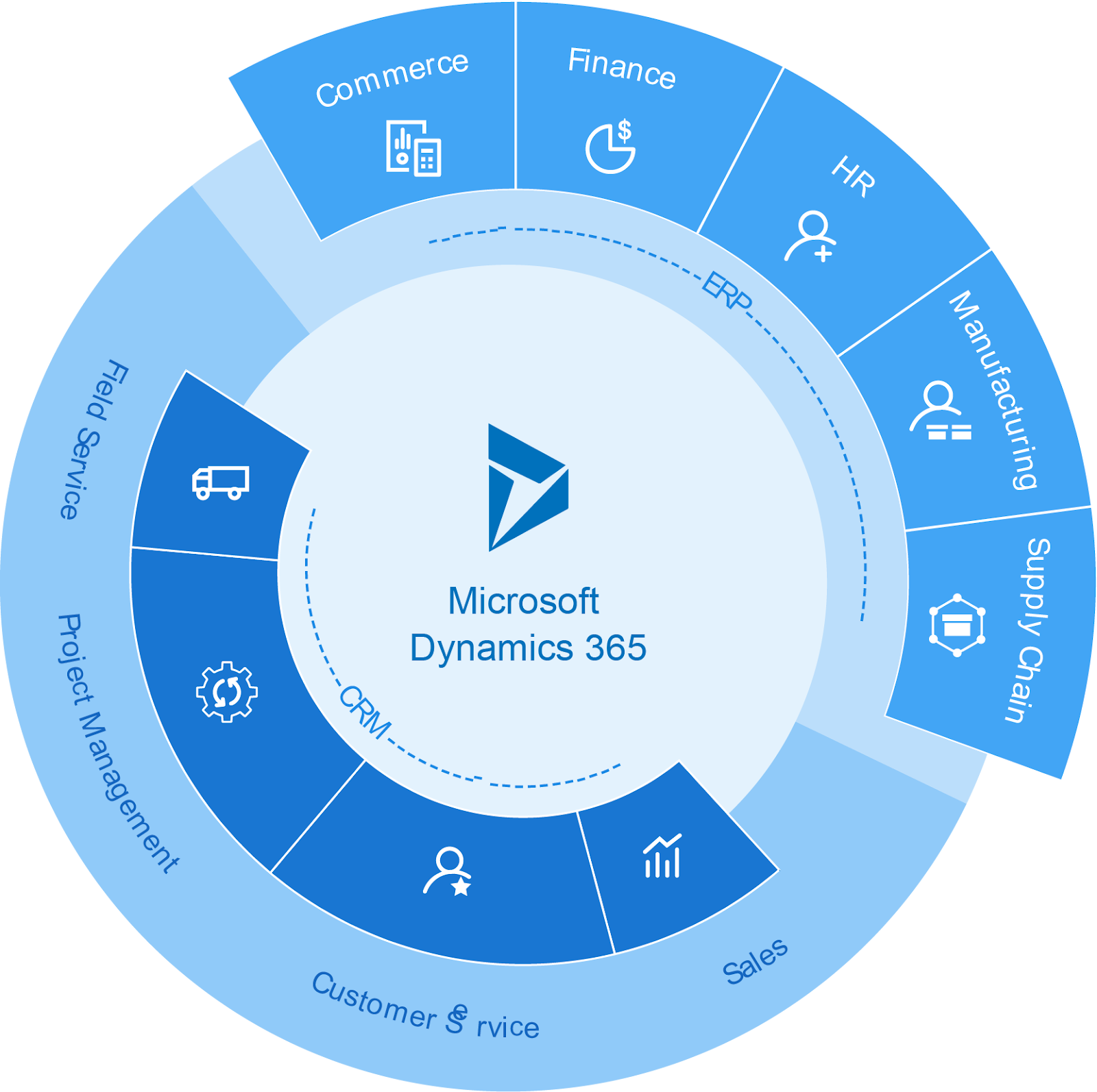
- CRM Integration (Microsoft Dynamics 365, Salesforce, HubSpot)
- Helps in aligning sales, marketing, and customer service teams.
- Provides a 360-degree view of customer interactions.
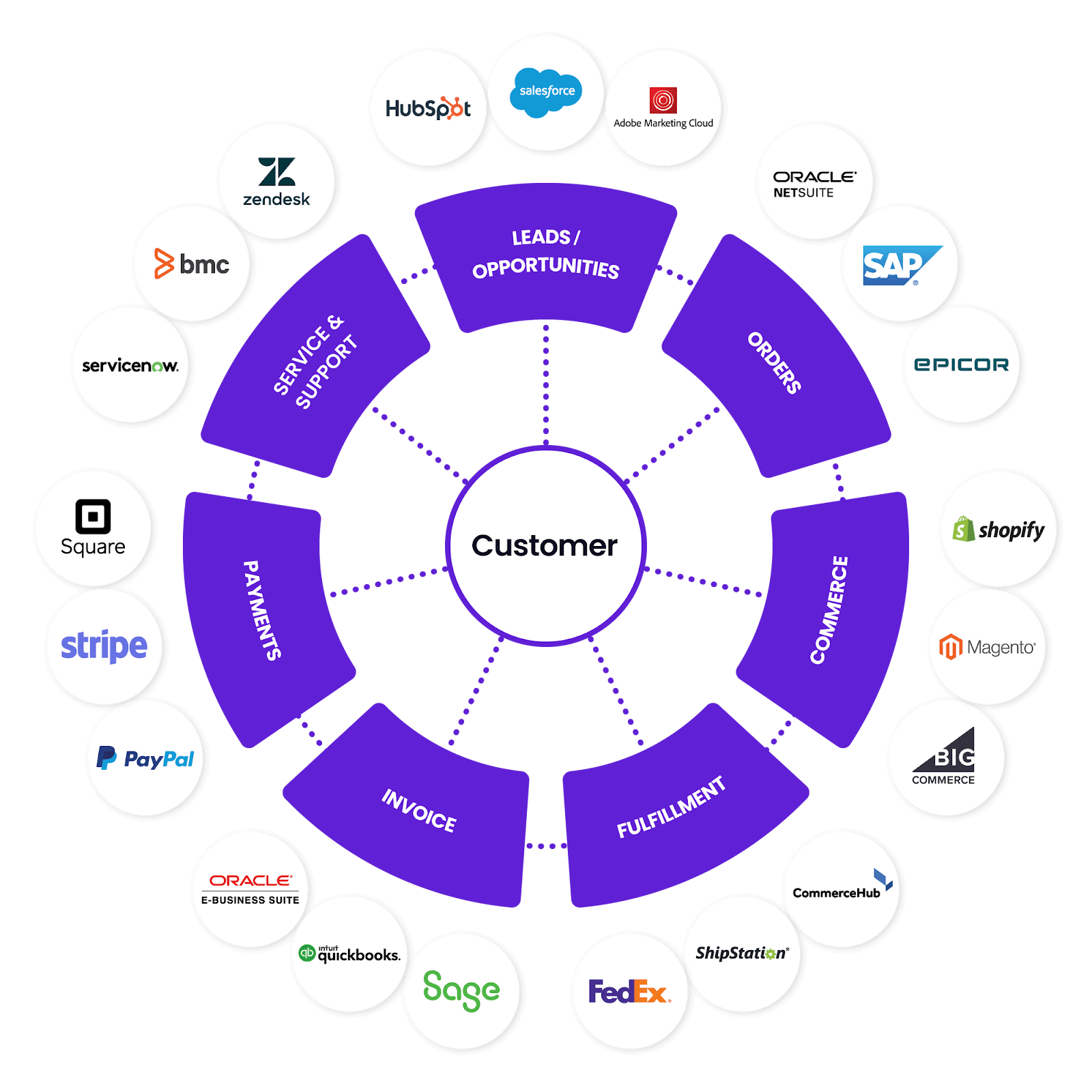
- eCommerce Integration (Shopify, Magento, WooCommerce)
- Automates order processing, inventory management, and pricing updates.
- Enhances customer experience through real-time tracking and personalized offers.
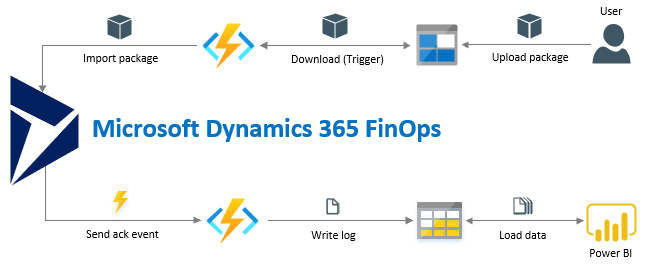
- Financial System Integration (Microsoft Dynamics FinOps, QuickBooks, NetSuite)
- Streamlines financial reporting, budgeting, and forecasting.
- Ensures accurate financial compliance and audit readiness.
- Supply Chain and Logistics Integration
- Improves inventory visibility, order fulfillment, and supplier coordination.
- Reduces costs and enhances efficiency through automated tracking.
- HRMS Integration (Workday, SAP SuccessFactors)
- Synchronizes payroll, attendance, and performance management.
- Ensures smooth workforce management and employee engagement.
Challenges in ERP Integration and How to Overcome Them
Despite its benefits, ERP integration comes with challenges that businesses need to address. Here’s how you can tackle them effectively:
- Data Silos and Inconsistencies
- Challenge: Different systems may use varied data formats, causing inconsistencies.
- Solution: Standardizing data formats and implementing real-time synchronization can help maintain consistency across systems.
- High Implementation Costs
- Challenge: Complex integrations can be costly.
- Solution: Adopting cost-effective solutions like API-based and iPaaS integrations can help reduce expenses without compromising efficiency.
- Security Risks
- Challenge: Integrations can expose sensitive business data to security vulnerabilities.
- Solution: Implementing secure authentication methods, data encryption, and compliance with global security standards is crucial for data protection.
- Downtime and Disruptions
- Challenge: Integrating a new system can cause temporary disruptions.
- Solution: A phased deployment strategy and thorough testing before going live can help ensure a smooth transition with minimal disruptions.
How Hudasoft’s ERP Consulting Services Help Businesses
At Hudasoft, we take a strategic approach to ERP integration, ensuring smooth implementation with minimal disruptions. Our ERP Consulting Services include:
- Needs Assessment & Strategy Planning: Understanding business requirements and defining an optimal integration approach.
- Custom Integration Development: Building tailored integrations using APIs, middleware, and automation tools.
- Data Migration & Synchronization: Ensuring seamless transfer of existing data into the integrated ERP system.
- Ongoing Maintenance & Support: Providing continuous monitoring, troubleshooting, and updates to enhance system performance.
Future of ERP Integration
With advancements in AI, machine learning, and IoT, the future of ERP integration is more intelligent and automated. Businesses that invest in seamless ERP integration will have a competitive edge by improving decision-making, reducing costs, and enhancing customer experiences.
Conclusion
ERP integration is no longer an option but a necessity for businesses aiming to enhance efficiency and stay competitive. Partnering with an ERP Integration Expert ensures seamless connectivity between your ERP and other business applications, leading to increased productivity, data accuracy, and operational excellence.
Hudasoft’s ERP Consulting Services offer tailored solutions for integrating Microsoft Dynamics 365, FinOps, Odoo, NetSuite, and more. Whether you need point-to-point integration, API-based connections, or advanced iPaaS solutions, our experts can help you achieve a fully connected digital ecosystem.
Looking to integrate your ERP system for better efficiency? Contact Hudasoft today and let’s build a smarter, more connected future for your business!
اترك تعليقاً